

The Beginning: Chris Evert and a New Era The season-ending championship began in Boca Raton, Florida, in 1972, at a time when women’s professional tennis was fighting for greater recognition and financial opportunity. The inaugural Virginia Slims Championships gave the emerging women’s circuit a prominent showcase and a significant financial prize. Seventeen-year-old Chris Evert won the first title, defeating Kerry Melville 7-5, 6-4 in the final. Evert defended her title in 1973 and added victories in 1975 and 1977, finishing with four championships. Evonne Goolagong Cawley won in 1974 and 1976. Their early rivalry helped establish the Finals as a serious test of the season’s best players rather than an exhibition at the end of the calendar.

New York, Madison Square Garden and Navratilova’s Record The event became closely identified with New York and Madison Square Garden, where indoor tennis and an energetic audience provided a distinctive stage. Martina Navratilova became its defining champion. She first won in 1978 and repeated in 1979, then captured the 1981 edition and five consecutive championships from 1983 through November 1986. Her eight singles titles remain the tournament record. The combination of a formidable serve, aggressive net play and superb movement made Navratilova especially difficult to beat on indoor surfaces. Her run also coincided with a scheduling transition: two editions were held in 1986 as the championship moved from its spring slot to the end of the year.
A Championship That Once Required Five Sets For a remarkable period from 1984 through 1998, the singles championship match was best of five sets. That demanding format set the Finals apart from the usual women’s tour schedule. Monica Seles beat Gabriela Sabatini in a five-set final in 1990. Steffi Graf survived five sets against Anke Huber in 1995 and against Martina Hingis in 1996. Those contests tested stamina as much as shot-making. Since 1999, the championship match has been played as best of three sets, but the five-set era remains one of the event’s most distinctive historical chapters.
Graf, Seles and the Next Generation Steffi Graf won five titles, in 1987, 1989, 1993, 1995 and 1996, combining relentless court coverage with one of the most damaging forehands in tennis history. Monica Seles announced a different kind of dominance when she won three straight championships from 1990 through 1992. Her first came when she was just 16, making her the youngest singles champion in the tournament’s history. Seles’s two-handed groundstrokes and aggressive returns reshaped baseline exchanges. Their successes showed that the Finals could reward both established greatness and the emergence of a new generation.
Serena Williams and the Modern Dynasty Serena Williams won her first title in 2001, when Lindsay Davenport withdrew before the final, and returned to win in 2009. Her most sustained run came from 2012 through 2014, when she claimed three consecutive championships. In 2014, she recovered from a lopsided round-robin defeat against Simona Halep to beat Halep in the final. Serena finished with five singles titles, matching Graf for second on the all-time list. Her serving power and competitive resilience made her particularly formidable against fields composed entirely of elite opponents.
The Unexpected Champions The WTA Finals has never been reserved exclusively for players with Grand Slam singles titles. In 1982, Sylvia Hanika upset Navratilova in the championship match after losing the opening set 6-1. It became the defining victory of her career. Gabriela Sabatini’s unseeded run in 1994 included a victory over Navratilova in the final singles match of Navratilova’s first retirement and ended with a championship win over Lindsay Davenport. In 2015, Agnieszka Radwańska lost two group matches but still advanced and won the title, using anticipation, touch and consistency to frustrate bigger hitters. Dominika Cibulková repeated the unusual path in 2016, recovering from two opening losses to defeat Angelique Kerber in the final. Elina Svitolina went undefeated in 2018, winning five matches and the championship without having won a Grand Slam singles title. Caroline Garcia added another surprise in 2022, defeating Aryna Sabalenka in Fort Worth with bold attacking tennis. These victories underline the tournament’s defining lesson: the best player over one intense week is not always the player with the most celebrated résumé.


A Decade of First-Time Winners From 2015 through 2025, every completed edition produced a first-time WTA Finals champion: Radwańska, Cibulková, Caroline Wozniacki, Svitolina, Ashleigh Barty, Garbiñe Muguruza, Garcia, Iga Świątek, Coco Gauff and Elena Rybakina. There was no tournament in 2020 because of the COVID-19 pandemic. Ten consecutive editions without a repeat winner is an extraordinary demonstration of the depth of women’s tennis. The round-robin format, changing playing conditions and physical demands of a long season can all contribute to unexpected outcomes.

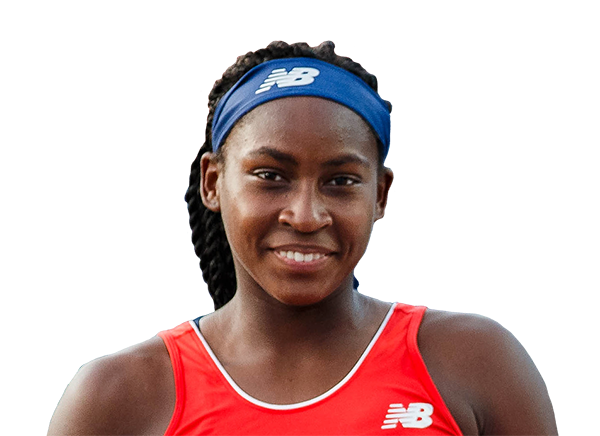

The Most Recent Champions Świątek dominated the 2023 final in Cancún, defeating Jessica Pegula 6-1, 6-0. Gauff captured the 2024 title in Riyadh after a dramatic three-set victory over Zheng Qinwen. In 2025, Rybakina defeated Sabalenka in straight sets to claim her first season-ending championship. Each champion succeeded with a different combination of strengths: Świątek’s relentless baseline control, Gauff’s defensive athleticism and Rybakina’s serve-led power. Their victories also set the stage for a compelling 2026 edition.


From Boca Raton to Indian Wells The championship has traveled widely since 1972. After Boca Raton and Los Angeles, it became a fixture in New York, with a one-year stop in Oakland. Munich hosted in 2001, the first edition outside the United States. Madrid, Doha, Istanbul, Singapore and Shenzhen later brought the Finals to new international audiences. More recent hosts have included Guadalajara, Fort Worth, Cancún and Riyadh. The 2026 edition is scheduled for November 8–15 at the Indian Wells Tennis Garden in California, returning the championship to the United States and linking its future to one of the sport’s most established hard-court venues.
Why the Format Creates Surprises The current singles event features eight players divided into two groups of four. Each plays three round-robin matches; the top two in each group advance to the semifinals. A player can lose a match and still win the championship, but every set and sometimes every game can influence qualification. This format is not the same as the event’s early editions, which used different knockout and double-elimination systems. Since 2003, the modern round-robin structure has offered second chances while forcing competitors to face elite opponents from their first match. It rewards tactical flexibility, resilience and the ability to recover quickly.
What the Championship Means Today The WTA Finals is not a Grand Slam, but its concentrated quality makes it one of the most demanding titles in tennis. Chris Evert helped give the event credibility in its earliest years. Navratilova established the record that still defines its history. Graf, Seles and Serena Williams added periods of dominance, while a long list of surprise winners demonstrated the depth of the women’s game. As the championship returns to California in 2026, the question is whether Rybakina can become the first player since Serena in 2014 to defend the title—or whether another new name will join the honor roll. Either outcome would add another chapter to a history stretching back more than half a century.
Most WTA Finals Singles Titles Player Titles Martina Navratilova 8 Steffi Graf 5 Serena Williams 5 Chris Evert 4 Monica Seles 3 Kim Clijsters 3 Evonne Goolagong Cawley 2 Gabriela Sabatini 2 Martina Hingis 2 Justine Henin 2
Complete WTA Finals Singles Champions, 1972–2025 The list includes both 1986 editions and notes the cancellation in 2020. Year Champion Runner-up 1972 Chris Evert Kerry Melville 1973 Chris Evert Nancy Richey 1974 Evonne Goolagong Cawley Chris Evert 1975 Chris Evert Martina Navratilova 1976 Evonne Goolagong Cawley Chris Evert 1977 Chris Evert Sue Barker 1978 Martina Navratilova Evonne Goolagong Cawley 1979 Martina Navratilova Tracy Austin 1980 Tracy Austin Martina Navratilova 1981 Martina Navratilova Andrea Jaeger 1982 Sylvia Hanika Martina Navratilova 1983 Martina Navratilova Chris Evert 1984 Martina Navratilova Chris Evert 1985 Martina Navratilova Helena Suková 1986 (March)Martina Navratilova Hana Mandlíková 1986 (Nov)Martina Navratilova Steffi Graf 1987 Steffi Graf Gabriela Sabatini 1988 Gabriela Sabatini Pam Shriver 1989 Steffi Graf Martina Navratilova 1990 Monica Seles Gabriela Sabatini 1991 Monica Seles Martina Navratilova 1992 Monica Seles Martina Navratilova 1993 Steffi Graf Arantxa Sánchez Vicario 1994 Gabriela Sabatini Lindsay Davenport 1995 Steffi Graf Anke Huber 1996 Steffi Graf Martina Hingis 1997 Jana Novotná Mary Pierce 1998 Martina Hingis Lindsay Davenport 1999 Lindsay Davenport Martina Hingis 2000 Martina Hingis Monica Seles 2001 Serena Williams Lindsay Davenport (walkover) 2002 Kim Clijsters Serena Williams 2003 Kim Clijsters Amélie Mauresmo 2004 Maria Sharapova Serena Williams 2005 Amélie Mauresmo Mary Pierce 2006 Justine Henin Amélie Mauresmo 2007 Justine Henin Maria Sharapova 2008 Venus Williams Vera Zvonareva 2009 Serena Williams Venus Williams 2010 Kim Clijsters Caroline Wozniacki 2011 Petra Kvitová Victoria Azarenka 2012 Serena Williams Maria Sharapova 2013 Serena Williams Li Na 2014 Serena Williams Simona Halep 2015 Agnieszka Radwańska Petra Kvitová 2016 Dominika Cibulková Angelique Kerber 2017 Caroline Wozniacki Venus Williams 2018 Elina Svitolina Sloane Stephens 2019 Ashleigh Barty Elina Svitolina 2020 Not held COVID-19 pandemic 2021 Garbiñe Muguruza Anett Kontaveit 2022 Caroline Garcia Aryna Sabalenka 2023 Iga Świątek Jessica Pegula 2024 Coco Gauff Zheng Qinwen 2025 Elena Rybakina Aryna Sabalenka


Comments
No comments yet.