

From November 8–15, eight singles players will compete at the Indian Wells Tennis Garden in California for the prestigious Billie Jean King Trophy and a share of the tournament's $15.5 million prize fund.
Seven players have already secured qualification. Elena Rybakina, Aryna Sabalenka, Mirra Andreeva, Jessica Pegula, Coco Gauff, Elina Svitolina and Linda Noskova are guaranteed places in the field.
The eighth position remains undecided, with Karolina Muchova, Iga Świątek and Marta Kostyuk competing for the final invitation.
That leaves ten players with realistic connections to the tournament, although only eight will ultimately participate.
The field features three of this season's Grand Slam champions, a defending WTA Finals winner, two American stars and several players seeking the biggest title of their careers.
But the unusual round-robin format means even the favorites face significant obstacles.
Here is SportsIn60's assessment of the ten leading names, why each could win and which player we expect to finish the season as champion.
Elena Rybakina: The Defending Champion and Player to Beat

Rybakina enters the WTA Finals with perhaps the strongest résumé in women's tennis this season.
The 27-year-old from Kazakhstan is ranked No. 1 in the world and leads the qualification race with 7,502 points.
She has won both the Australian Open and US Open in 2026, establishing herself as the season's most accomplished Grand Slam performer.
She also enters as the defending WTA Finals champion after defeating Sabalenka in last year's final.
Rybakina's greatest advantage is her serve.
At her best, she can dominate service games, shorten points and prevent opponents from establishing the extended rallies they prefer.
Her flat groundstrokes are particularly effective on hard courts, where she can take control before opponents settle into defensive positions.
That style should translate well to Indian Wells, although the venue's relatively slow hard courts and high-bouncing conditions can reward players with strong movement.
The biggest concern is her health.
Rybakina withdrew from the recent Wuhan Open because of a foot injury, raising questions about her preparation and physical condition.
She is scheduled to compete in Ningbo before the Finals, providing an opportunity to evaluate her recovery.
Why she can win: She has already demonstrated the ability to defeat the world's best players on the biggest stages, and her serve gives her an advantage in close matches.
Biggest obstacle: Her foot injury and the challenge of defending a title against an exceptionally strong field.
Aryna Sabalenka: The Hard-Court Powerhouse

Sabalenka has spent much of the season demonstrating why she remains one of the most dangerous players in women's tennis.
The Belarusian has reached five finals in 2026, winning three titles, including the prestigious Indian Wells and Miami tournaments.
Those victories are especially relevant because the WTA Finals will also be contested on hard courts.
Sabalenka reached the Australian Open and US Open finals this year, demonstrating consistency at the highest level.
Her game is built around aggressive serving, powerful returns and the ability to dictate rallies from the baseline.
Few opponents can match her sustained pace when she is playing confidently.
Sabalenka also has extensive experience at the WTA Finals.
She has qualified for six consecutive editions and reached the championship match twice, including last year.
However, she has yet to win the season-ending title.
That creates an intriguing challenge.
Sabalenka has repeatedly demonstrated that she can reach major finals, but converting those opportunities into victories has not always been straightforward.
Why she can win: She has already won at Indian Wells this season, and her powerful baseline game is capable of overwhelming any opponent.
Biggest obstacle: Maintaining composure and serving accuracy in the decisive moments of close matches.
Mirra Andreeva: The Young Grand Slam Champion

At just 19, Andreeva has established herself among the elite players in women's tennis.
The Russian won her first Grand Slam title at Roland Garros in June and has continued building an impressive season.
She also won titles in Adelaide and Linz and reached the Madrid Open final.
Her qualification for the WTA Finals represents another major milestone.
Although she competed in doubles at the tournament last year, this will be her first appearance in the singles championship.
Andreeva's game is unusually sophisticated for someone so young.
She combines intelligent shot selection with excellent movement and the ability to change direction during rallies.
Rather than relying exclusively on power, she frequently wins points through positioning, variation and anticipation.
That versatility could make her especially dangerous in the round-robin stage, where players must adjust quickly to different opponents.
Her biggest challenge is experience.
Facing several top-ranked players in a compressed tournament creates mental and physical demands that differ from a traditional Grand Slam draw.
Why she can win: Her combination of movement, tactical intelligence and confidence following her French Open triumph gives her the tools to beat every player in the field.
Biggest obstacle: Managing the pressure and unfamiliar demands of her first WTA Finals singles appearance.
Jessica Pegula: The Consistent American Contender

Pegula enters the WTA Finals after another productive season.
The 32-year-old American has won two titles in 2026, capturing championships in Dubai and Charleston.
She also reached the Cincinnati final, where she lost to Gauff.
Pegula's consistency has helped her qualify for the season-ending championship for the fifth consecutive year.
She reached the WTA Finals championship match in 2023 and advanced to the semifinals in 2025.
Those experiences could prove valuable.
Pegula's strengths include precise ball striking, reliable returns and an ability to redirect opponents' pace.
She rarely needs spectacular shot-making to control matches.
Instead, she applies consistent pressure and forces opponents to maintain a high standard throughout long rallies.
That approach can be particularly effective against aggressive players who struggle with errors.
The challenge is generating enough offensive pressure against opponents such as Rybakina and Sabalenka.
Pegula sometimes needs to take greater risks when facing players who can dominate with their serves.
Why she can win: Her consistency, hard-court experience and familiarity with the tournament make her a dangerous opponent in every round.
Biggest obstacle: Producing enough attacking tennis to defeat multiple elite power players.
Coco Gauff: A Former Champion Seeking Another Breakthrough
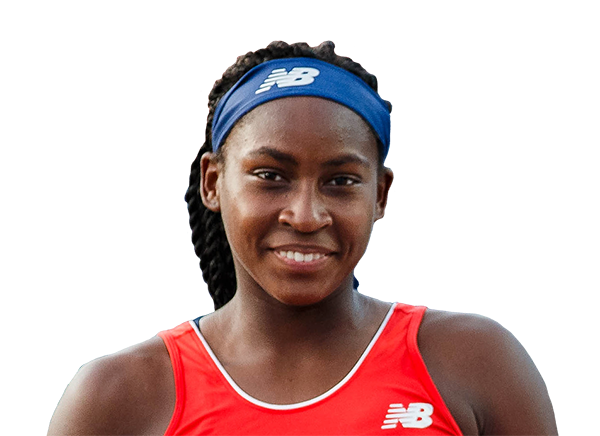
Gauff has already demonstrated that she can win the WTA Finals.
The American captured the title in 2024, defeating Qinwen Zheng in the championship match.

Two years later, she returns as a more experienced player with another opportunity to finish the season on top.
Gauff won the Cincinnati Open in August, defeating Pegula in straight sets.
She also reached the finals in Miami and Rome and advanced to the semifinals at Wimbledon and the US Open.
Those results demonstrate her ability to compete across different surfaces and against varied opponents.
Her greatest strength remains her athleticism.
Gauff's speed, defensive instincts and ability to extend rallies can frustrate even the most powerful opponents.
She is also capable of turning defense into offense, creating winners from positions where many players would simply try to survive.
However, her serve and forehand can become vulnerable under pressure.
Opponents who consistently attack those areas can disrupt her rhythm.
Why she can win: Her movement, defensive ability and previous championship experience give her a strong foundation for another title run.
Biggest obstacle: Maintaining serving consistency and avoiding stretches of unforced errors against aggressive opponents.
Elina Svitolina: The Veteran With Championship Experience

Svitolina's return to the WTA Finals is one of the season's most compelling stories.
The Ukrainian has qualified for the first time since 2019, completing an impressive return to the highest level of women's tennis.
She won titles in Auckland and Rome this season and reached the Dubai final.
Svitolina also brings something several younger competitors lack: experience winning this tournament.
She captured the WTA Finals title in 2018 without losing a match and reached the final again in 2019.
Her strengths include exceptional movement, defensive discipline and the ability to extend rallies until opponents make mistakes.
Svitolina is particularly effective when she controls the tempo and forces aggressive players to hit additional shots.
Her experience could be valuable in the round-robin format.
However, at 32, she must manage the physical demands of facing elite competition over several consecutive matches.
Why she can win: She understands how to navigate the WTA Finals and has already demonstrated that her game can succeed against the strongest players.
Biggest obstacle: Generating enough offense against opponents capable of consistently controlling points.
Linda Noskova: The Wimbledon Champion With Nothing to Lose

Noskova enters the WTA Finals following the most significant season of her career.
The 21-year-old Czech won Wimbledon in July, capturing her first Grand Slam championship.
She also won the Berlin title and reached the Indian Wells semifinals earlier in the season.
Her success has secured her first WTA Finals appearance.
Noskova's greatest strength is her aggressive ball striking.
She possesses a powerful serve and can take the ball early, allowing her to dictate rallies before opponents establish their preferred patterns.
Her Wimbledon championship demonstrated that she can perform under extraordinary pressure.
The challenge is adapting to a tournament where every opponent is among the world's best.
At Wimbledon, Noskova had opportunities to build momentum through the early rounds.
At the WTA Finals, there are no easy opening matches.
Still, her Indian Wells semifinal appearance suggests the venue should suit her game.
Why she can win: Her power, confidence and success at Indian Wells make her a dangerous opponent capable of producing an upset.
Biggest obstacle: The consistency required to defeat several elite players rather than producing one outstanding performance.
Karolina Muchova: The Favorite for the Final Qualification Spot

Muchova is not officially qualified, but she currently occupies the strongest position among the remaining contenders.
The Czech has accumulated 4,735 qualification points, placing her ahead of Świątek and Kostyuk.
Muchova has enjoyed an impressive season, including a title in Doha and a run to the French Open final.
Her playing style is among the most versatile on the WTA Tour.
She combines slice, net approaches, changes of pace and intelligent court positioning.
That variety makes her difficult to prepare for, particularly in a field dominated by aggressive baseline players.
Muchova can disrupt an opponent's rhythm without relying on overwhelming power.
Her greatest concern is availability.
She has experienced injuries throughout her career and is not scheduled to compete in Ningbo.
That means her qualification depends partly on results elsewhere.
If she reaches Indian Wells healthy, she could be a dangerous opponent.
Why she can win: Her tactical variety and ability to change playing styles could create problems for the tournament's biggest hitters.
Biggest obstacle: Securing qualification and remaining physically prepared for the demanding schedule.
Iga Świątek: A Former Champion Fighting to Qualify

Świątek's presence in the qualification battle is one of the season's biggest surprises.
The six-time Grand Slam champion has been a regular participant at the WTA Finals since 2021 and won the title in 2023.
But 2026 has been unusually difficult.
She has won only one title, at the Canadian Open, and failed to advance beyond the quarterfinals at any of the four Grand Slam tournaments.
Her season has also included a coaching change, with Francisco Roig joining her team in April.
Świątek has acknowledged the importance of qualifying and described the challenge as a motivating opportunity.
She currently trails Muchova in the race and needs strong results in Ningbo and Tokyo.
If she qualifies, however, her championship potential remains substantial.
Świątek is one of the sport's best returners, and her movement and heavy topspin can disrupt opponents' timing.
She also has extensive experience winning major titles.
Why she can win: Her championship pedigree, elite movement and ability to dominate from the baseline make her dangerous regardless of recent form.
Biggest obstacle: She must first qualify, then overcome the inconsistency that has affected her season.
Marta Kostyuk: The Long Shot With Upset Potential

Kostyuk faces the most difficult qualification challenge among the three remaining contenders.
The Ukrainian has 3,920 race points, trailing Muchova by 815.
She needs exceptional results during the final weeks of the season to secure a place.
But Kostyuk has demonstrated the ability to challenge top-ranked opponents.
She defeated Świątek at Roland Garros earlier this year before losing their rematch in Toronto.
Her aggressive baseline game and willingness to attack can create problems for opponents who prefer longer rallies.
Kostyuk also moves well and can generate pace from defensive positions.
The difficulty is sustaining that level over several matches.
She sometimes experiences periods of inconsistency, particularly when her aggressive approach produces too many errors.
Her immediate priority is qualification.
But if she reaches Indian Wells, she would have an opportunity to compete without the same expectations placed on the leading favorites.
Why she can win: Her athleticism and aggressive shot-making give her the ability to defeat highly ranked opponents.
Biggest obstacle: She faces a demanding qualification scenario and would enter the tournament with less championship experience than most of the field.
Why the WTA Finals Format Changes Everything
Unlike a traditional knockout tournament, the WTA Finals begins with round-robin competition.
The eight singles players are divided into two groups of four.
Each competitor plays three group matches, with the top two players from each group advancing to the semifinals.
That format creates unusual strategic challenges.
A player can lose an early match and still win the championship.
But a poor start can also place enormous pressure on the remaining group matches.
Set percentages and game percentages may become important in resolving ties.
The format rewards players who recover quickly from disappointing results and maintain concentration throughout the week.
It can also favor experienced competitors who understand how to manage energy across consecutive matches against elite opposition.
That is one reason players such as Rybakina, Sabalenka, Pegula, Gauff and Svitolina may have an advantage over first-time participants.
However, the younger players could benefit from having fewer expectations.
Andreeva and Noskova have already won Grand Slam titles this year, demonstrating that they can handle major occasions.
The tournament's outcome may ultimately depend on which players adapt most effectively to their groups.
SportsIn60's Championship Contenders
The strongest candidates entering the tournament fall into three categories.
Rybakina and Sabalenka are the established favorites.
Both have demonstrated exceptional hard-court ability, reached major finals and possess the power to dominate opponents.
Andreeva, Gauff and Pegula form the next group.
Each has the talent and experience to win, although their paths to the championship involve different challenges.
Noskova and Svitolina are dangerous alternatives.
Noskova brings the confidence of a Wimbledon champion, while Svitolina has already won the WTA Finals and understands its demands.
The final qualifier will also deserve attention.
Muchova's versatility could produce surprises, while Świątek would immediately become a significant contender if she secures a place.
But there is one player whose season stands above the rest.
SportsIn60 Prediction: Elena Rybakina Wins the 2026 WTA Finals
Our selection is Elena Rybakina.
The world No. 1 has won two Grand Slam titles this season and enters as the defending WTA Finals champion.
Her combination of serving power, aggressive groundstrokes and experience makes her exceptionally difficult to defeat when healthy.
She has already demonstrated that she can win the tournament's biggest matches, including last year's championship victory over Sabalenka.
Sabalenka represents her strongest challenger.
The Belarusian's Indian Wells and Miami titles demonstrate that she can dominate on hard courts, and her powerful baseline game creates problems for virtually every opponent.
Andreeva also has the potential to reach the final, particularly if she uses her tactical versatility to disrupt the more aggressive players.
But Rybakina's ability to control service games and shorten rallies gives her a narrow advantage.
Her foot injury remains the biggest uncertainty.
If that issue limits her movement or prevents her from serving effectively, the championship race could change dramatically.
Assuming she arrives healthy, however, she is the strongest choice.
SportsIn60 predicts Elena Rybakina will defeat Aryna Sabalenka in the 2026 WTA Finals championship match, successfully defending her title.
It would be a fitting conclusion to a season in which Rybakina has established herself as the dominant force in women's tennis.
But with ten players still connected to the eight-player field and several capable of winning major titles, the final tournament of 2026 promises compelling competition from the opening round through the championship match.
Sources
- WTA — Official 2026 WTA Finals Tournament Information
- WTA — Official Race to the WTA Finals Standings
- WTA — Seven Players Qualified, One Place Remaining
- WTA — Final Qualification Scenarios
- WTA — Pegula and Gauff Qualify
- WTA — Andreeva and Noskova Qualify
- WTA — Sabalenka Qualifies for Sixth Consecutive WTA Finals
- WTA — Rybakina Injury and Ningbo Preview
- Reuters — Świątek's Qualification Challenge
Comments
No comments yet.