

Winning the WTA Finals requires something different from winning a Grand Slam. There are no comfortable opening rounds, no unseeded qualifiers to ease into the competition and almost no opportunity to hide a weakness.
Every singles participant has earned a place among the season's elite. Every opponent is dangerous. And one disappointing performance can transform a championship dream into a desperate fight for survival.
Yet the tournament's unusual round-robin format has produced some of women's tennis's most extraordinary championship stories.
In 2015, Agnieszka Radwańska lost her first two matches, needed help from another player just to reach the semifinals and somehow emerged as champion.
One year later, Dominika Cibulková followed an almost identical path, surviving two opening defeats before defeating the world's top-ranked player in the final.
Then, in 2018, Elina Svitolina entered the championship without a Grand Slam singles title and proceeded to defeat five consecutive opponents, capturing the biggest trophy of her career.
These were not victories by inexperienced players who suddenly discovered how to compete at the highest level. All three were established professionals with significant accomplishments.
But none had won a Grand Slam singles championship, and none entered her respective tournament as the obvious favorite.
Their victories demonstrated that the WTA Finals can reward more than rankings, reputation or previous major titles.
Sometimes, the championship belongs to the player who refuses to accept that her opportunity has disappeared.
2015: AGNIESZKA RADWAŃSKA'S IMPROBABLE COMEBACK
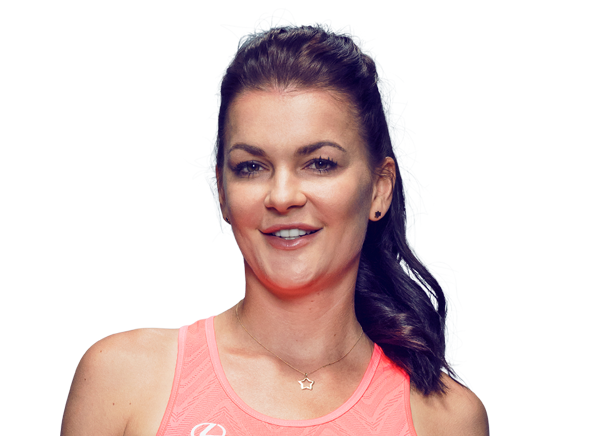
By the autumn of 2015, Agnieszka Radwańska was widely recognized as one of the most intelligent players in women's tennis.
The Polish star had reached the Wimbledon final in 2012, climbed as high as No. 2 in the world and established a reputation for exceptional touch, court awareness and defensive anticipation.
But she had never won a Grand Slam singles title.
Her playing style also differed dramatically from many of her leading rivals.
While Serena Williams, Maria Sharapova and Petra Kvitová could overwhelm opponents with power, Radwańska relied on precision, variation and an extraordinary ability to anticipate where the ball would travel.
She was a master at transforming defense into offense.
Those qualities made her dangerous, but they did not make her the favorite entering the 2015 WTA Finals in Singapore.
Radwańska arrived as the fifth qualifier after a late-season resurgence, including a title in Tianjin.
Her championship hopes appeared to unravel almost immediately.
She lost her opening match to Sharapova, 4-6, 6-3, 6-4, then fell to US Open champion Flavia Pennetta, 7-6, 6-4.
Two matches. Two defeats.
In a traditional elimination tournament, her season would already have been over.
But the WTA Finals offered one final opportunity.
THE MATCH THAT SAVED HER SEASON
Radwańska entered her final group match against Simona Halep knowing she needed a straight-sets victory to have any realistic chance of advancing.
Even that would not guarantee qualification.
She also needed Sharapova to defeat Pennetta in straight sets later in the competition.
Against Halep, Radwańska faced a critical moment in the opening-set tiebreak.
She trailed 5-1, putting her championship hopes within two points of elimination.
Instead of surrendering, she produced a remarkable comeback, winning six consecutive points to take the tiebreak.
She then dominated the second set, completing a 7-6, 6-1 victory.
But her fate remained outside her control.
Radwańska later recalled watching Sharapova's match against Pennetta from her hotel room while receiving treatment.
When Pennetta built a significant lead, Radwańska believed her tournament was effectively over.
Sharapova eventually recovered and won in straight sets, giving Radwańska the qualification result she needed.
The Polish star advanced to the semifinals with a 1-2 group record.
She had survived by the narrowest of margins.
BEATING MUGURUZA AND KVITOVÁ
Radwańska's reward was a semifinal against Garbiñe Muguruza, who had won all three of her round-robin matches.
Muguruza took the opening set in a tiebreak, placing Radwańska under pressure once again.
But the Polish player adjusted, extended rallies and used her tactical variety to frustrate the powerful Spaniard.
Radwańska recovered to win 6-7, 6-3, 7-5.
The final presented another difficult assignment: two-time Wimbledon champion Petra Kvitová.
Kvitová possessed the kind of explosive left-handed game capable of overpowering almost any opponent.
Radwańska countered with movement, patience and intelligent changes of direction.
She won the opening set 6-2, lost the second 4-6 and then took the deciding set 6-3.
After beginning the tournament with two defeats, Radwańska was the WTA Finals champion.
It was the biggest title of her career.
Her achievement demonstrated that surviving difficult moments can be just as important as dominating opponents.
She had needed a comeback against Halep, help from Sharapova and consecutive three-set victories in the knockout rounds.
Every stage demanded something different.
And she found a way through them all.
2016: DOMINIKA CIBULKOVÁ REPEATS THE IMPOSSIBLE

If Radwańska's 2015 championship appeared unlikely, what happened one year later was even more remarkable.
Dominika Cibulková arrived at the 2016 WTA Finals in Singapore making her tournament debut.
The Slovakian was known for her aggressive baseline play, exceptional energy and willingness to attack opponents despite standing just 5 feet 3 inches tall.
She had reached the Australian Open final in 2014, losing to Li Na, but had never won a Grand Slam singles championship.
Cibulková's 2016 season had included significant success, particularly during the second half of the year.
She won titles at Katowice, Eastbourne and Linz, with her late-season form helping secure qualification.
Still, the championship field included more established major winners.
Angelique Kerber had captured the Australian Open and US Open and finished the season as world No. 1.
Defending champion Radwańska was also competing.
Cibulková was dangerous, but few expected her to win the entire tournament.
A DISASTROUS OPENING
Cibulková's first match came against Kerber.
The Slovakian pushed the world No. 1 through three demanding sets but lost 7-6, 2-6, 6-3.
Her second match brought another defeat, this time against Madison Keys, 6-1, 6-4.
Once again, a future champion stood at 0-2.
Cibulková had played two matches against elite opposition and lost both.
Her championship chances appeared minimal.
But she remained mathematically alive.
In her final group match, she faced Simona Halep, another player capable of extending rallies and punishing mistakes.
Cibulková responded with one of her most important performances of the season.
She defeated Halep 6-3, 7-6, finishing group play with one victory and two defeats.
The result, combined with the other group outcomes, allowed her to advance to the semifinals.
For the second consecutive year, the WTA Finals had produced a semifinalist who lost two of her three group matches.
THE SEMIFINAL THAT CHANGED EVERYTHING
Cibulková faced Svetlana Kuznetsova in the semifinals.
Kuznetsova, a two-time Grand Slam champion, had qualified for the tournament following a remarkable late-season push.
The match became an exhausting three-set battle.
Cibulková lost the opening set but fought back to win 1-6, 7-6, 6-4.
The victory required physical endurance and mental resilience.
More importantly, it gave her an opportunity to face Kerber again.
Only days earlier, Kerber had defeated Cibulková in the round-robin stage.
Now they would meet for the championship.
A FINAL NOBODY EXPECTED
Kerber entered the final as the clear favorite.
She had won two Grand Slam titles that season, reached the Wimbledon final and established herself as the world's leading player.
Cibulková, meanwhile, was appearing in her first WTA Finals championship match.
But the Slovakian produced one of the finest performances of her career.
She attacked Kerber's second serve, stepped inside the baseline and dictated rallies with aggressive groundstrokes.
Instead of allowing Kerber to extend points and force errors, Cibulková consistently looked for opportunities to finish exchanges.
The result was a stunning 6-3, 6-4 victory.
After losing her first two matches, Cibulková had won three consecutive contests against Halep, Kuznetsova and Kerber.
She had also avenged her opening-round defeat against the world's top-ranked player.
The championship became the defining achievement of her career.
It remains a powerful reminder that the most dangerous player in a tournament is not always the one with the strongest record entering the semifinals.
Sometimes, it is the competitor whose game improves dramatically when elimination becomes unavoidable.
2018: ELINA SVITOLINA'S PERFECT WEEK IN SINGAPORE

Elina Svitolina's 2018 championship followed a different script.
Unlike Radwańska and Cibulková, the Ukrainian did not need a complicated tiebreak scenario or help from another player to survive the group stage.
Instead, she won every match.
Her victory was surprising for another reason.
Svitolina had already established herself as one of the world's strongest players, winning important WTA titles and reaching a career-high ranking of No. 3.
But her results at Grand Slam tournaments had not matched her success elsewhere.
She had never advanced beyond the quarterfinals of a major before the 2018 season-ending championship.
Questions persisted about whether she could reproduce her best tennis under the greatest pressure.
The WTA Finals offered an opportunity to change that narrative.
FIVE MATCHES AGAINST THE ELITE
Svitolina entered the Singapore championship as the sixth seed.
Her round-robin group included Petra Kvitová, defending champion Caroline Wozniacki and Karolína Plíšková.
It was a formidable collection of opponents.
Kvitová was a two-time Wimbledon champion.
Wozniacki had won the Australian Open earlier that year and was defending her WTA Finals title.
Plíšková possessed one of the strongest serves in women's tennis.
Svitolina opened by defeating Kvitová 6-3, 6-3.
She then beat Plíšková 6-3, 2-6, 6-3 before overcoming Wozniacki 5-7, 7-5, 6-3.
Three matches. Three victories.
Unlike the previous two surprise champions, Svitolina entered the semifinals with momentum and an undefeated record.
Her next opponent was Kiki Bertens.
The Dutch player had also enjoyed a strong tournament, defeating several established stars.
Svitolina survived another demanding three-set match, winning 7-5, 6-7, 6-4.
She was one victory away from the biggest title of her career.
THE CHAMPIONSHIP MATCH AGAINST SLOANE STEPHENS
The final featured an intriguing matchup between Svitolina and American Sloane Stephens.
Stephens had won the 2017 US Open and reached the French Open final earlier in 2018.
She had also won all three of her round-robin matches in Singapore.
Both players were exceptional defenders, capable of extending rallies and turning seemingly lost points into offensive opportunities.
Stephens controlled the opening set, winning 6-3.
Svitolina needed to change the match's direction.
She became more assertive from the baseline, improved her court positioning and forced Stephens into longer, more physically demanding exchanges.
The Ukrainian won the second set 6-2 and maintained her momentum in the deciding set.
She completed a 3-6, 6-2, 6-2 victory, capturing the championship without losing a match throughout the tournament.
Svitolina had defeated five consecutive opponents, including multiple Grand Slam champions.
Her performance was especially impressive because she won four of those matches in three sets.
She repeatedly demonstrated the ability to recover from setbacks without allowing frustration to dictate her play.
The championship did not immediately resolve every question about her Grand Slam record.
But it proved she could defeat the world's strongest players repeatedly in one of tennis's most demanding competitive environments.
THREE CHAMPIONS, THREE DIFFERENT PATHS
The similarities between these championship stories are striking.
Radwańska, Cibulková and Svitolina were established players who had experienced significant success without winning a Grand Slam singles title.
Each entered the WTA Finals facing opponents with stronger major championship résumés.
And each left with the biggest title of her career.
But their paths reveal three different lessons.
Radwańska demonstrated the value of adaptability.
Her tactical intelligence allowed her to survive against opponents with greater power, while her ability to recover from an almost impossible qualification scenario defined her championship.
Cibulková showed how aggression and confidence can transform a tournament.
After two defeats, she began playing with greater conviction and ultimately overwhelmed the world's No. 1 player.
Svitolina demonstrated the importance of sustained excellence.
She did not rely on a fortunate group-stage result. She defeated every opponent she faced and repeatedly recovered from losing sets.
Together, their victories explain why the WTA Finals is so difficult to predict.
WHY THE ROUND-ROBIN FORMAT CREATES UNEXPECTED CHAMPIONS
The WTA Finals differs from the four Grand Slam tournaments because losing a match does not necessarily mean elimination.
Eight singles players are divided into two groups of four.
Each competitor plays three round-robin matches, with the top two players from each group advancing to the semifinals.
That structure creates opportunities unavailable in a conventional knockout event.
Radwańska and Cibulková would have been eliminated after their opening defeats in a traditional tournament.
Instead, both received additional opportunities to adjust their tactics, recover confidence and build momentum.
But the format also creates pressure.
Players must understand complicated qualification scenarios, recover quickly from difficult matches and prepare for elite opponents without the benefit of easier early rounds.
The tournament rewards mental flexibility as much as technical ability.
A player who starts slowly can still become champion.
A player who dominates the group stage can still lose in the semifinals.
And a competitor without a Grand Slam title can outperform opponents with far more celebrated résumés.
THE LEGACY OF THREE UNEXPECTED CHAMPIONS
Radwańska retired in 2018 without winning a Grand Slam singles championship.
Cibulková retired in 2019, also without a major singles title.
Their WTA Finals victories remain defining achievements that demonstrate how much more there is to tennis greatness than Grand Slam trophies alone.
Svitolina has continued competing at the highest level, and her 2018 championship remains one of the most significant achievements of her career.
As the 2026 WTA Finals approaches, these three stories offer an important reminder.
The favorite does not always win.
The player with the strongest Grand Slam record does not always win.
And a disappointing opening match does not necessarily end a championship campaign.
In 2015, Radwańska appeared to be heading home before the semifinals.
In 2016, Cibulková lost twice before finding her best tennis.
In 2018, Svitolina defeated everyone placed in front of her.
Three different paths led to the same extraordinary destination.
For the next generation of WTA Finals contenders, their message remains relevant: qualification earns a place in the tournament, but resilience, adaptability and performance under pressure determine who becomes champion.
Sources
- WTA — WTA Finals Flashback: Turning Group Setbacks Into Championship Runs
- WTA — Official 2015 WTA Finals Results
- WTA — Official 2016 WTA Finals Results
- WTA — Official 2018 WTA Finals Results
- WTA — Svitolina Defeats Stephens to Win the 2018 WTA Finals
- Tennis.com — Radwańska’s Unlikely Run to the 2015 Semifinals
Comments
No comments yet.