

A tennis ball machine should make good practice easier to organise. The right purchase is the machine you can transport comfortably, set up quickly and use for a clear purpose. Buying the most powerful launcher does not automatically produce the most useful training.
For players who regularly lift equipment into a car, the Hydrogen Sports Proton deserves particular attention. For a smaller budget and basic repetition, the Spinshot Lite and Sports Tutor Tennis Cube belong on the shortlist. Players who want extensive programmable movement should compare machines such as the Spinshot Player, Titan ACE and Spinfire Pro 2. Slinger offers a different proposition: a launcher built into a wheeled tennis bag. Tennibot’s Partner Lite adds another option for buyers interested in camera-assisted training and a relatively compact machine.
There is no universal winner. A machine that works well at a club with a ground-level storage room may be inconvenient for someone carrying it down apartment stairs. A beginner’s best investment may be a basic machine plus coaching, while a competitive player may genuinely use programmable changes in depth and direction.
This Tennisin60 guide combines published specifications with our buying judgments and suggested practice methods. It is a researched comparison, not a claim that Tennisin60 independently tested every machine. Prices and policies were checked for this edition on October 29, 2026. Manufacturer battery figures are advertised estimates, not results from one common test. Unless marked C$, prices are U.S. dollars, before shipping and applicable taxes. Suggested used prices are negotiation targets, not verified averages of completed sales.
The shortlist at a glance
Read the weight descriptions carefully. Battery, hopper and accessory configurations differ, and some manufacturers publish more than one figure. These are selected portable options, not every machine sold in 2026. A lower headline price may describe a different package from the one you need.
| Machine | Advertised new price in US dollars | Published weight basis |
|---|---|---|
| Hydrogen Sports Proton | $1,695 | 17 lb without battery; about 20 lb with battery |
| Spinshot Lite | From $649 sale listing | Product page says 22 lb battery model; comparison chart labels weight differently |
| Sports Tutor Tennis Cube | $869; $969 with oscillator | Product page lists 24 lb; model chart distinguishes configurations |
| Slinger Tennis Launcher | $749 launcher; $849 Tournament Pack | 33 lb without balls |
| Lobster elite liberty | $1,179 | 35 lb listed machine weight |
| Tennibot Partner Lite | $1,525 | Approximately 25 lb advertised |
| Spinshot Player | From $2,179 | Comparison chart lists 41 lb without battery installed |
| Titan ACE | $2,199 displayed; check power selection | 39 lb empty; manufacturer lists 58 lb with 150 balls |
| Spinfire Pro 2 | From $2,099; power configuration changes price | Current lithium configuration about 45 lb total; external battery separates the load |
The comparison below is more useful than an undifferentiated “battery life” ranking. A quoted two hours of continuous feeding is different from a long court session that includes instruction, recovery and ball collection.
| Machine | Hopper capacity | Published battery estimate |
|---|---|---|
| Proton | Approximately 100 balls | About 1,000 balls or two hours |
| Spinshot Lite | Chart says 50; product page says over 40 | Two to three hours on current U.S. product page |
| Tennis Cube | 70 balls | About two hours |
| Slinger | Up to 144 balls | Up to 3.5 hours |
| Lobster elite liberty | 150 balls | Two to four hours |
| Tennibot Partner Lite | 140 tennis balls | Four to five hours, conditions dependent |
| Spinshot Player | 120 balls | Two to three hours |
| Titan ACE | 150 balls | Roughly two hours; battery capacity changes the estimate |
| Spinfire Pro 2 | 150 balls | Three to eight hours, settings dependent |
Sources for both tables: [1–15, 27, 28], the manufacturer pages and Canadian retailer specifications listed at the end. Where official pages disagree, the disagreement is shown rather than silently resolved in favour of the more attractive number. Get the ready-to-play weight, included battery and exact model designation in writing before paying.
Start with the journey from home to court
The first useful test is a transport rehearsal. Think through the entire route: storage cupboard, stairs, doorway, car boot, parking area, path, gate and court. A machine can be easy to wheel on a smooth surface and difficult to lift across a high boot lip. Small wheels may be satisfactory indoors but awkward on gravel or uneven paving.
Ask to lift the machine yourself, using the manufacturer’s designated handles. A demonstration in a shop should include the actual battery configuration. If lifting is difficult, separate the battery and balls where the design permits, choose a lighter machine or arrange ground-level storage. Do not assume that a shoulder strap makes any load comfortable for a long walk.
Empty weight also hides the balls. Regulation tennis balls weigh 56.0–59.4 grams under the ITF specification. One hundred therefore add about 5.6–5.9 kilograms, or 12.3–13.1 pounds, before a basket or bag. A full 150-ball load adds about 8.4–8.9 kilograms. These are calculations from the ball specification, not claims about the weight of every manufacturer’s sample balls. [23]
That makes separate trips sensible. Move the machine with the hopper empty, then bring the balls in a suitable basket. Keep a safe route through the gate and avoid balancing racquets or loose accessories where they can fall into the wheels. Follow the manual about transport orientation; not every machine is designed to lie on its side.
Measure the folded machine and the car opening, not just the boot floor. Include protruding handles and the space needed to grip them. A removable or inverted hopper can make a large difference. Check whether charging requires bringing the whole machine indoors or simply removing a small battery.
For an apartment owner, the best machine may be the lightest acceptable option even if another model offers more drills. For a coach with on-court storage, capacity and controls may matter more. Portability is a practical condition of ownership, not a single specification on a comparison page.
Proton for the player who prioritises carrying weight
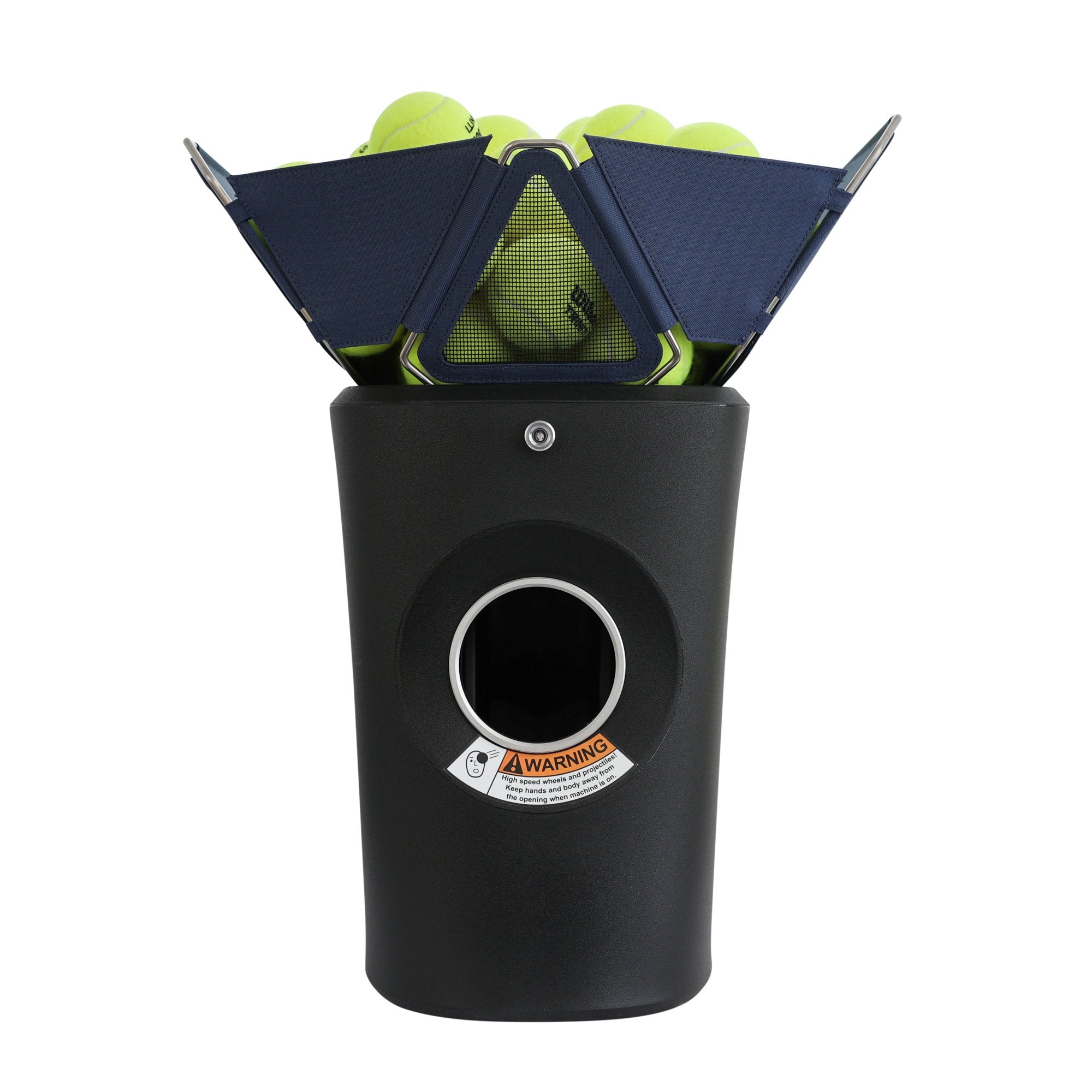
The Proton combines a compact body, removable battery and app-based programming. Its listed U.S. price is $1,695, with a hopper of about 100 balls. The important carrying figure is approximately 20 pounds including the battery, rather than the 17-pound body-only headline. Canadian retailer RacquetGuys lists it at C$2,699. [1, 2]
Our buying judgment: it is a strong shortlist choice when stairs and car loading are decisive but you still want varied drills. Try the controls before purchasing, and establish who will service a Canadian machine. Hydrogen’s U.S. direct-sales page restricts where its machines may be shipped and kept; a Canadian dealer purchase is a separate route that needs its own support confirmation. [1, 2]
Spinshot Lite for lower-cost repetition
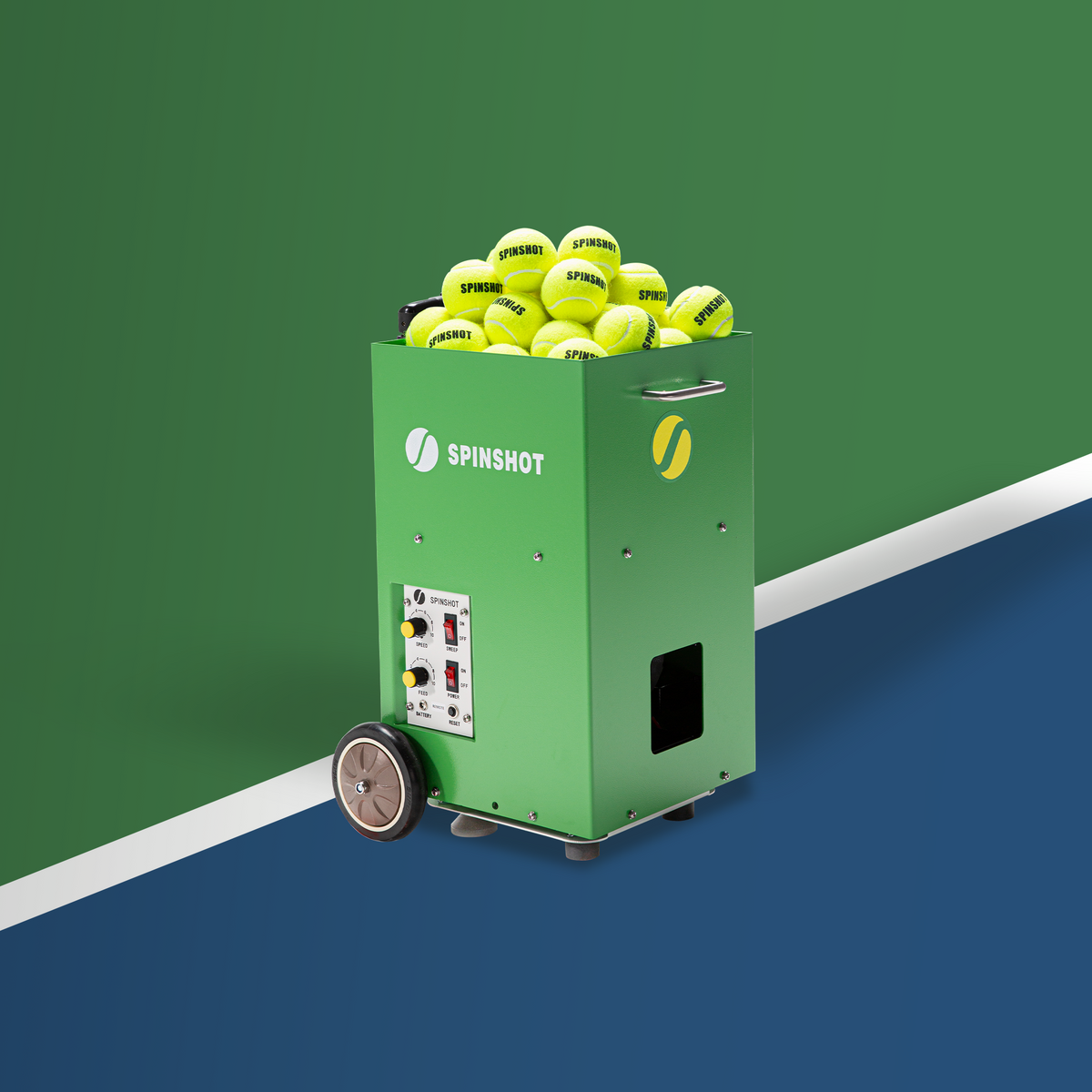
The U.S. Lite listing starts at $649 on sale. It offers a much lower performance ceiling than the programmable Player model, with feeds up to about 37 mph. Its product page describes a 22-pound battery version and over 40 balls, while the comparison chart lists 50 balls and uses a different weight heading. Ask the seller to reconcile those specifications for the unit supplied. [3, 4]
Our judgment: basic repetition does not require a premium machine. A modest launcher can support contact work, controlled movement and target practice. Its limitation is the range of feeds you can create as your training develops. Avoid buying it specifically for advanced pace-and-spin combinations that the model does not promise.
Tennis Cube for straightforward controls

The Tennis Cube is listed at $869, or $969 with oscillation, with a 70-ball hopper and approximately two hours of battery operation. The dedicated product page lists 24 pounds and speeds up to 50 mph. Its simple controls will appeal to players who want to start feeding without organising a phone-based drill. [5]
Our judgment: compare the exact oscillator version with the basic model before deciding that the prices are equivalent. A predictable feed is enough for many technical tasks, but automatic side-to-side variation can become useful later. Test whether its available feed height and pace match your normal practice, rather than purchasing solely because it is compact.
Slinger for integrated transport and storage
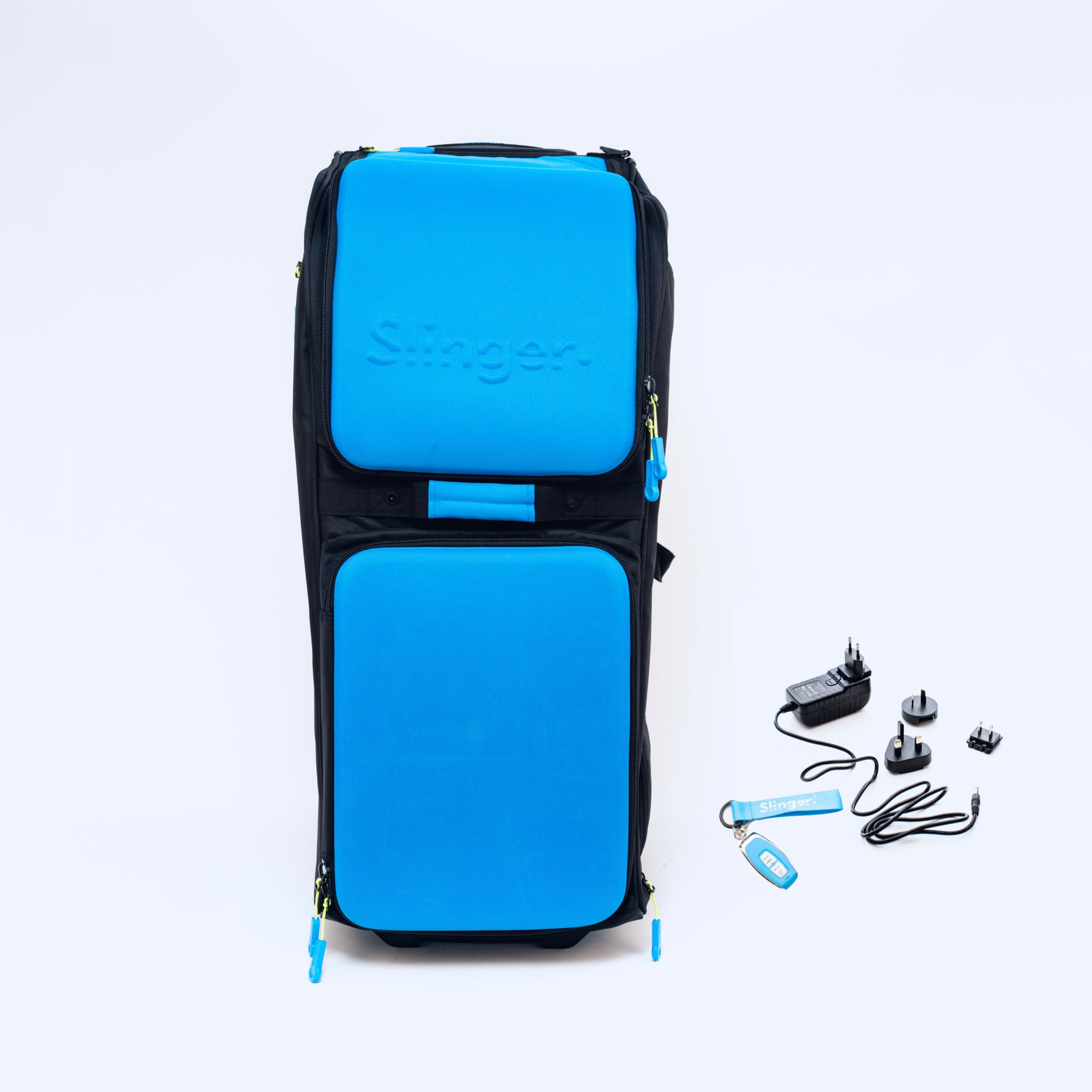
Slinger places the launcher inside a wheeled tennis bag. Its U.S. launcher listing is $749; the Tournament Pack listing is $849. The Canadian Tournament Pack page lists C$999 and includes the oscillator. Published specifications include 33 pounds without balls, storage for up to 144 balls and battery operation up to 3.5 hours. [6, 7]
Our judgment: integrated storage is convenient, but 33 pounds is not the same carrying proposition as a battery-equipped Proton. Try the height, bounce and spin of its feeds before choosing it for a particular stroke project. Confirm oscillator inclusion and actual availability: catalogue pages and shipping notices have shown different stock messages. A listed price is not a guaranteed delivery date. [28, 29]
Lobster elite liberty for an established portable format
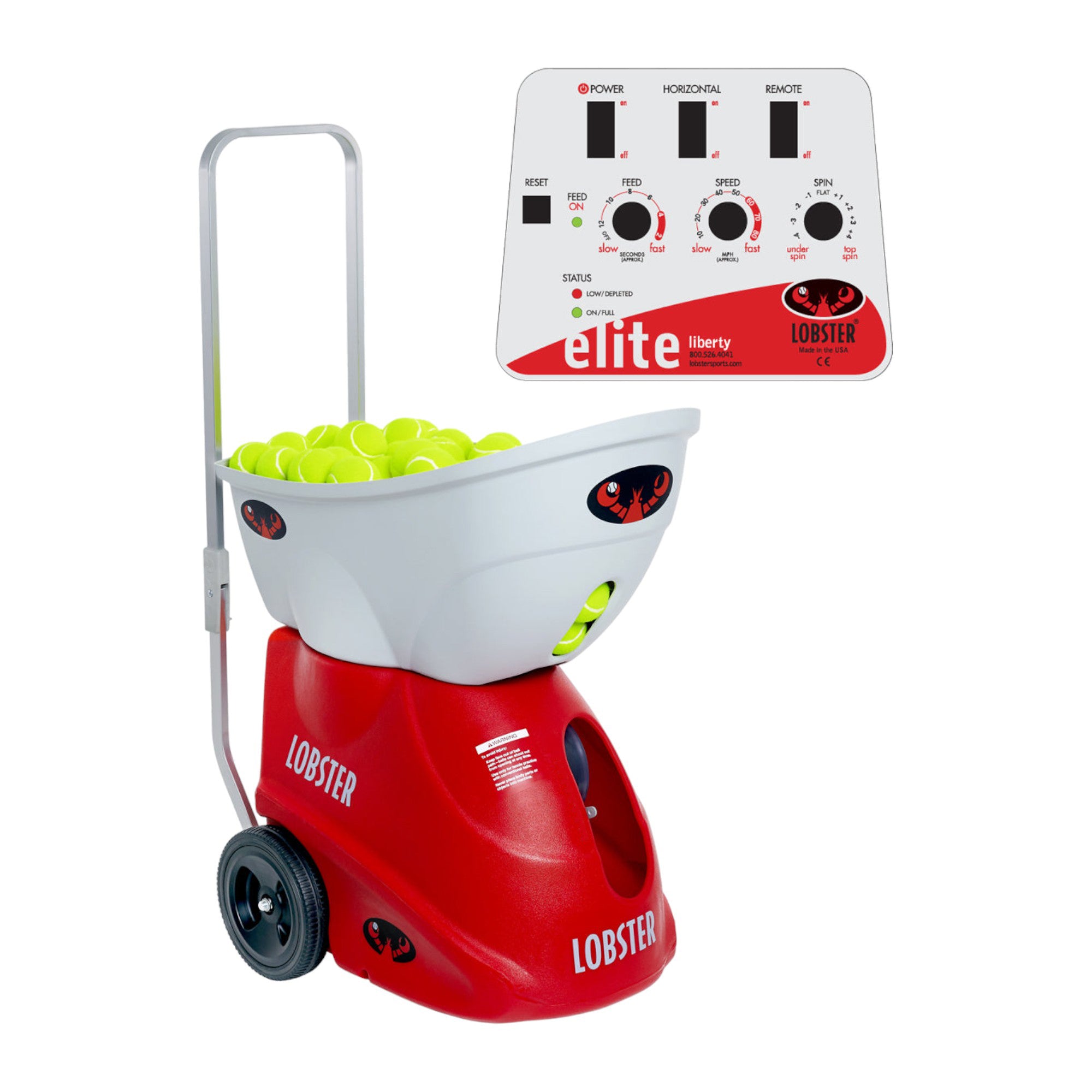
The elite liberty is listed at $1,179, with 150-ball capacity, a 35-pound machine weight and two to four hours of court time. It offers topspin, backspin and horizontal oscillation, with published speeds up to 70 mph. Its hopper, wheels and folding handle provide a familiar portable-machine layout. [8]
Our judgment: this is a useful comparison point between basic launchers and more expensive programmable machines. It belongs on a used shortlist too, provided the exact generation is identifiable and its battery, feeding wheels and oscillation operate correctly. Do not confuse the Liberty with other Lobster models: similar-looking machines can have substantially different controls and drill capabilities.
Tennibot Partner Lite for buyers considering newer smart systems
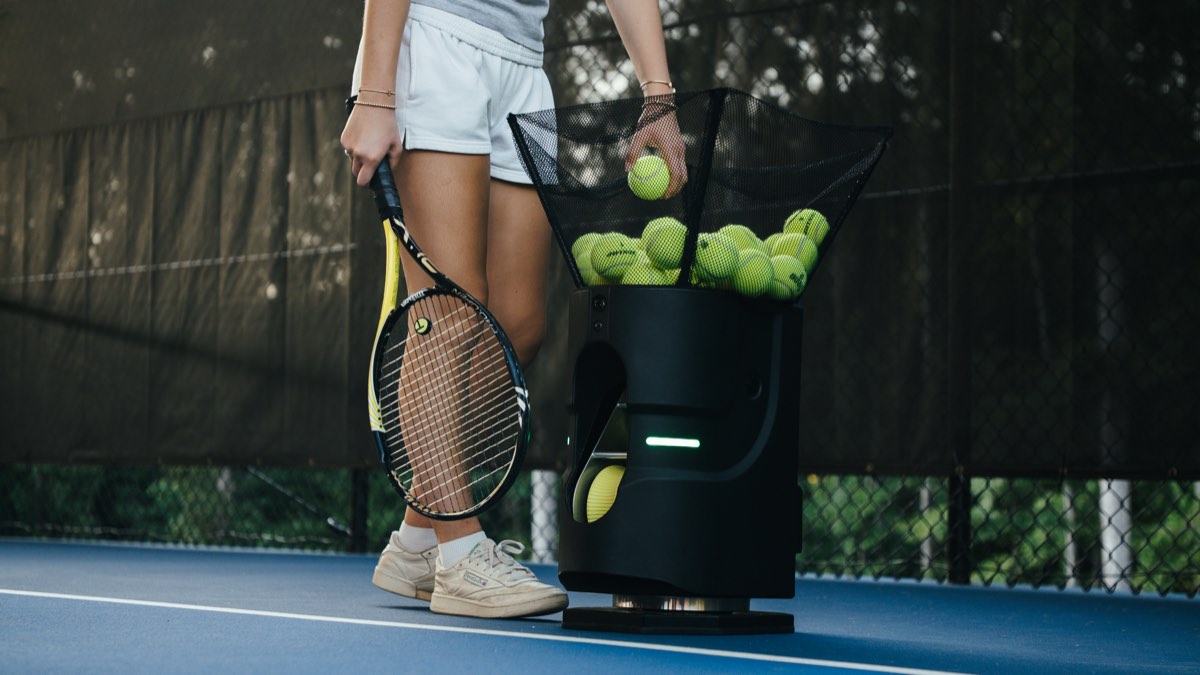
Tennibot lists its stationary Partner Lite at $1,525, approximately 25 pounds, with 140 tennis balls and a claimed four-to-five-hour battery duration. It shares software features with the company’s moving Partner V2, but does not itself travel around the court between feeds. The tennis version must not be confused with the separate pickleball configuration. [9, 10]
Our judgment: consider it if its current training functions suit your aims, but book a demonstration and confirm delivery timing. App-based or AI-labelled features are not evidence that a machine improves your technique automatically. Ask which functions operate without an internet connection and what support is available where you live.
Spinshot Player for programmable practice
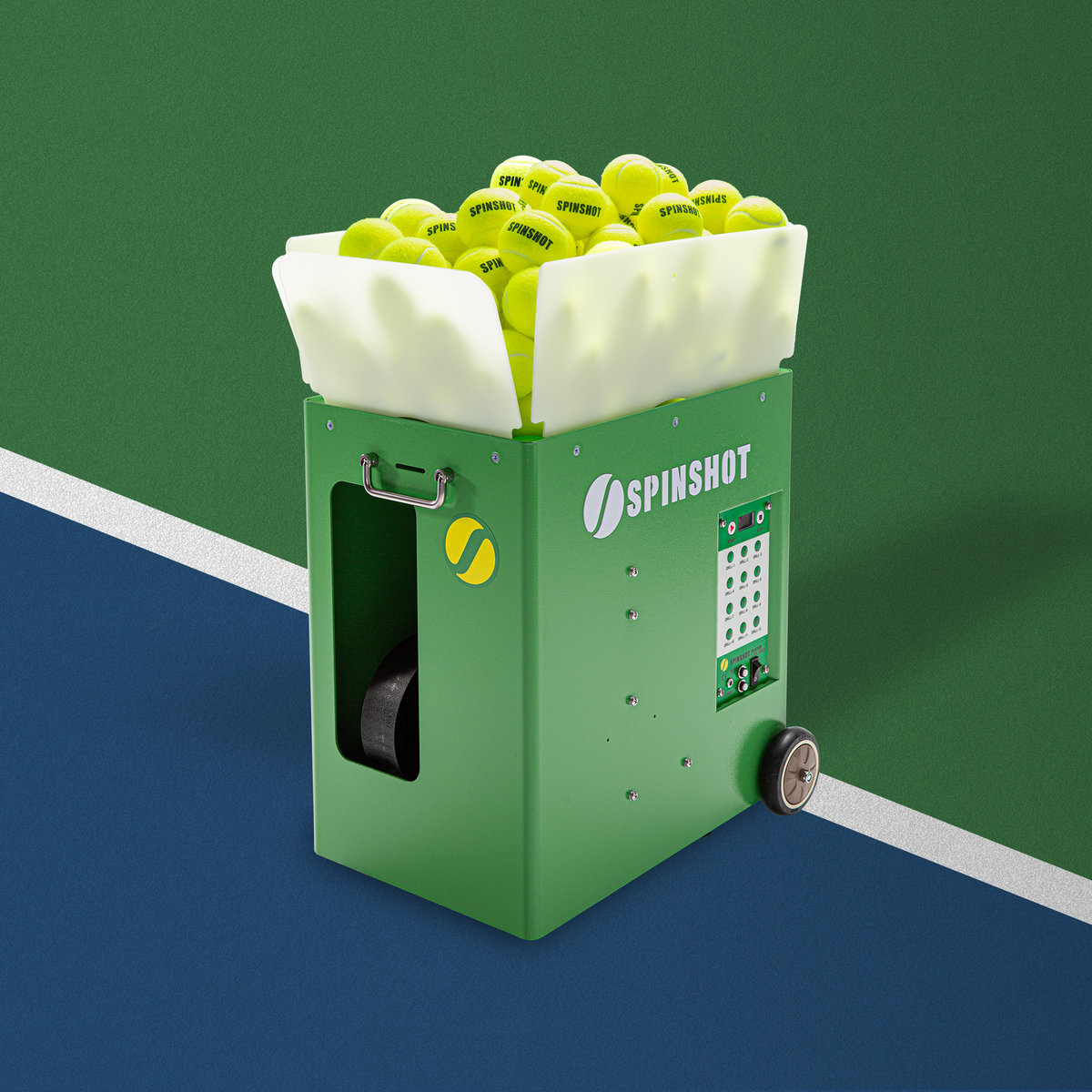
The Player is listed from $2,179 in the U.S. and from C$2,399 on the Canadian site. It holds 120 balls and supports custom drill sequences. The U.S. comparison chart lists 41 pounds without the battery installed, so confirm the complete lifting weight. It is a different class of transport commitment from the smallest machines. [4, 11, 12]
Our judgment: programmable placement is worthwhile when you regularly practise planned combinations. It offers less benefit if you mostly select one comfortable feed and hit through the hopper. A used Player can be attractive, but check app connection and saved-drill operation on your own phone before agreeing a price.
Titan ACE for large capacity and internal oscillation
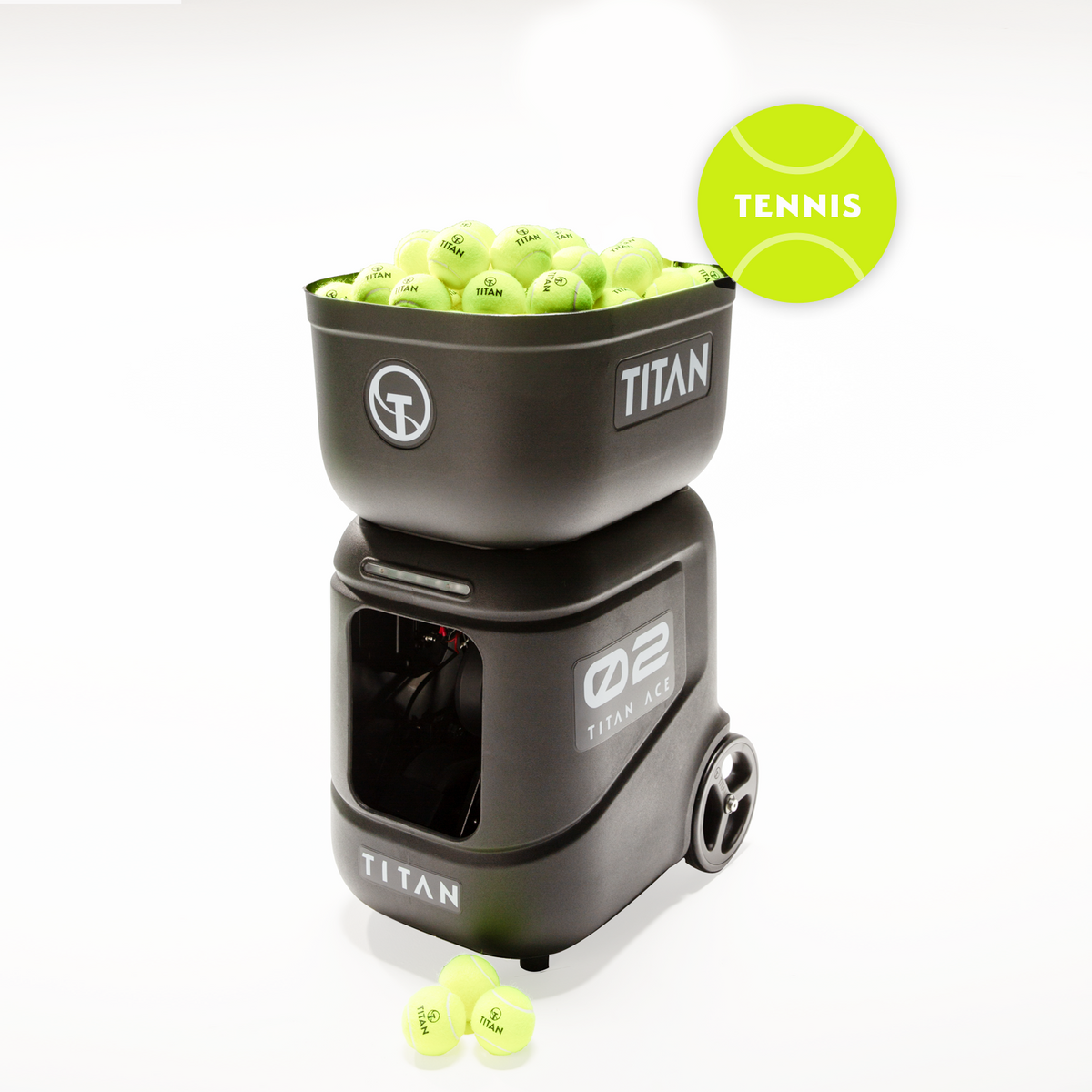
Titan’s ACE page displays $2,199 and offers power selections that must be checked at checkout. It holds 150 balls, uses internal oscillation and lists 39 pounds empty versus 58 pounds with a full hopper. Its hopper can be inverted for transport. Battery duration depends on the selected pack; Titan describes roughly two hours in its general battery guidance. [13, 14]
Our judgment: it is worth comparing for structured movement practice and frequent use. The full-load figure also demonstrates why hopper capacity should not be confused with easy lifting. Decide which battery and charger are included, whether a separate remote is necessary for you, and who supplies replacements locally.
Spinfire Pro 2 for extensive variation

The Pro 2 offers internal oscillation, 150-ball capacity and app control. Its official page lists pricing from $2,099, but power configuration affects the package. Current lithium options are listed around 45 pounds combined, with an external-battery arrangement separating the battery from an approximately 40-pound body. Advertised battery duration spans three to eight hours. [15]
Our judgment: compare it when you need variation in direction and depth and can manage the load. Its broad battery range should encourage questions about settings, not a claim that every session lasts eight hours. Older lead-acid versions have different weights, so a second-hand listing needs an exact battery and generation description.
What to budget beyond the machine
The useful price is the amount required to begin dependable practice. Add suitable balls, a collection method, delivery, tax, a cover where recommended and any necessary remote. A spare battery is valuable only if your sessions genuinely require it or charging arrangements make it useful. Optional stands, advanced remotes and accessories should solve a specific problem.
For a Canadian buyer, compare the delivered local price with the complete cost of an import. Do not simply convert a U.S. headline price and assume the result is the Canadian price. Exchange rates, delivery, taxes, brokerage arrangements, warranty service and battery shipping can change the decision. Obtain a written delivered quotation where those charges are unclear.
There is a practical middle ground between the cheapest unit and a fully equipped premium package. Buy the feed options you will use during the next year. Keep part of the budget for a lesson in which a coach helps establish settings, targets and movement. A well-chosen practice task can make a basic machine more useful than an expensive machine running an aimless sequence.
Compare ownership with rental as well. If your club offers a machine, book several sessions before buying one. Record how much time you actually spend practising, whether setup is convenient and which functions you miss. Occasional users may be better served by rental. Frequent users with reliable court access can justify ownership more readily, but the purchase still needs a realistic schedule.
Warranties and support deserve a separate comparison
The number of years printed beside a product is only the beginning. Ask what is covered, who is protected, where repairs take place and who pays transport. A long machine warranty can coexist with a short battery warranty. Ordinary wear may be excluded even when an electronic component is covered.
Hydrogen publishes a one-year Proton warranty for the original retail purchaser. Its terms require proof of purchase and describe warranty shipping within the contiguous United States. That matters when comparing a local Canadian sale with a machine bought elsewhere. Do not assume that the original buyer’s coverage transfers to a private-sale purchaser. [16]
Lobster’s warranty table separates the machine from consumable components: two years for the machine, six months for the battery and server wheels, and six months for demo or reconditioned models. Its policy also allocates repair-shipping costs. A factory-supported used machine can therefore have a different risk profile from an untested private sale. [17]
Slinger’s published policy provides 12-month coverage for specified components for the original owner and excludes battery life or charge capacity. The Canadian policy should be read for a Canadian purchase. That distinction is especially important when a seller describes a used battery as “still under warranty.” [18]
Spinshot’s U.S. policy states two years for personal use and one year for commercial or club use. Its page contains differing battery references, including three months for directly purchased batteries and a later six-month component statement. The Canadian warranty page states two years for the machine and six months for directly purchased batteries. Ask the supplying distributor to confirm the applicable terms in writing. [19, 20]
Titan’s published terms distinguish two-year personal coverage from one-year commercial coverage, and list three months for batteries and chargers purchased directly from Titan. Its pre-owned service requirements deserve attention before a private purchase. Spinfire’s current product page advertises two-year standard coverage including battery, parts, labour and shipping. Its support policy distinguishes six-month SLA battery coverage from two years for lithium LiFePO4 batteries, with regional terms requiring confirmation. Ask whether any extended option transfers. [13, 15, 26]
Sports Tutor publishes three-year machine coverage on the Cube and Tutor pages; battery terms and territory should be checked in the exact model’s warranty. Tennibot advertises a three-year limited warranty and 60-day trial, with its tennis Lite page specifying that non-U.S. return shipping is the buyer’s responsibility. A trial, a return policy and a defect warranty are three different protections. [5, 21, 22]
Before purchasing, send the dealer the proposed use: personal, shared family, coaching or club rental. Ask about batteries, wheels, remote controls, shipping, original receipts and second owners. Save the reply with the invoice. The goal is to know what happens if the machine fails, rather than discovering the important exclusion after it has already stopped feeding.
Which machines make the best used purchases
Our first used shortlist is an identifiable Lobster Elite or Sports Tutor model with demonstrable parts support, followed by a programmable Spinshot whose electronics and app functions work correctly. A Proton can be a good lightweight used purchase when its battery, aiming and control functions can be tested. A Slinger can be worthwhile at a sufficiently low price with its remote and battery working.
These are buying judgments, not reliability rankings established by a failure-rate study. Condition is more important than the badge. A carefully maintained older machine with a replaceable battery may be a better purchase than a recent machine stored wet or dropped during transport. Conversely, age alone does not prove that a robust-looking machine has years of useful life remaining.
Older machines with straightforward controls have an appeal: fewer software questions and an easier demonstration of basic operation. More sophisticated used machines can offer excellent value if the current app connects, all functions work and replacement parts remain available. Ask the manufacturer about the specific serial number rather than assuming that support for a brand means support for every past model.
Start with factory demos and dealer-reconditioned units. Sports Tutor’s own store lists demo machines and replacement components. Spinshot Canada also lists demo Players and other models, with prices and stock changing. Those listings provide a real alternative against which to judge a private seller’s asking price. A private sale close to an authorised demo price needs a strong reason. [24, 25]
For a machine with no operating demonstration, no receipt and an uncertain battery, price it as a repair project. “It worked last summer” does not show its present battery capacity, aiming accuracy or feeding consistency. The saving must cover the possibility that it cannot be economically returned to dependable service.
Used buying targets and maximum offers
The following figures are Tennisin60 negotiation ranges for working examples, with required controls and charger included. They are not live offers, certified appraisals or measured sold-price averages. Model generation, local supply and condition can move a sensible price outside the range. Compare with today’s equivalent new package, not a seller’s remembered original invoice.
| Used machine or category | Suggested US dollar buying target | Important condition |
|---|---|---|
| Slinger with working remote and battery | $250–450 | Check oscillator separately and verify battery under load |
| Tennis Cube or basic compact Sports Tutor | $350–600 | Identify version and test feeding and oscillation if fitted |
| Lobster elite liberty | $450–750 | Battery, wheels and full sweep must work |
| Other older Lobster Elite or Tennis Tutor models | $600–1,000 | Price depends heavily on model and features |
| Hydrogen Proton | $900–1,200 | Correct battery, aiming and app demonstration |
| Spinshot Player | $900–1,400 | Generation, battery and programmable functions verified |
| Recent Titan ACE or Spinfire Pro 2 | About 50–70% of matching new package | Confirm generation, battery chemistry and support |
| Untested machine with missing parts | Repair-project price only | Obtain repair estimates before making an offer |
As a Canadian starting point, a working used Slinger at roughly C$350–600 may be interesting against the C$999 Canadian Tournament Pack listing, depending on whether an oscillator is included. A used Proton around C$1,350–1,750 is a reasonable negotiation starting band against the C$2,699 local listing. These are editorial targets, not evidence of actual Canadian completed sales.
For a Spinshot Player, do the arithmetic against local new and demo offers. The Canadian collection has listed a new Player from C$2,399 and demo examples from C$1,949, with another used-demo listing from C$1,900. At those reference prices, a private machine at C$1,800 with an old battery and uncertain coverage is difficult to justify. A materially lower price may compensate for that uncertainty. [12, 25]
Use a ceiling calculation: equivalent delivered new price, less the value of missing warranty, less confirmed parts and repair costs, less an allowance for unknowns. If a charger or remote is missing, get the correct replacement quote first. An inexpensive generic part that resembles the original is not automatically compatible.
For example, suppose a comparable new package costs $1,200. You value its warranty and dealer setup at $200, expect $120 of required parts and want a $150 uncertainty allowance. Your ceiling is $730. These are illustrative inputs, not universal depreciation rules. Change them to fit the actual machine and the risks you are prepared to accept.
Do not pay extra for a large pile of unusable balls. Check the value of accessories individually. A nearly new collection basket is useful; cracked balls, a damaged cover and an obsolete phone mount may add little. Be willing to walk away if the seller will not permit a safe demonstration or cannot explain a removed serial label.
A proper inspection before handing over money
Arrange to see the machine on a court where use is permitted. Ask the seller to charge it fully beforehand, bring the correct charger and show the original paperwork if available. Have a simple list of functions to test so the demonstration does not consist entirely of watching five comfortable forehands.
Begin with an external inspection while the machine is off. Look for cracked housings, loose wheels, damaged handles, rusty fasteners, worn cables and signs that the unit has been stored in damp conditions. Inspect accessible connectors and the battery compartment as the manual permits. Do not dismantle a battery pack or reach into the launch mechanism.
Then check a slow, repeatable feed with a consistent set of balls. Watch whether successive balls land in a reasonably similar area after the machine settles. Increase speed and test spin, elevation and feed intervals where those features are fitted. Some variation comes from the balls themselves, so do not diagnose a fault using a random mixture of flat and nearly new balls.
Test the entire oscillation range, not just the central position. On programmable machines, run a sequence that changes direction and depth. Watch for intermittent stops, unexpected resets, unusual mechanical sounds or loss of aim. Test the remote from the receiving end of the court and connect the relevant app using your own supported phone.
A useful demonstration lasts long enough to reveal behaviour after initial startup. Twenty to thirty minutes of varied use is more informative than two minutes, although it still does not establish full battery endurance. If battery condition is central to the price, arrange a longer test or budget for replacement. A charging indicator is not a capacity test.
Finish by stopping the feed, switching off as directed, unloading safely and trying the transport arrangement. Check every included accessory against the agreement. Record the model, serial number, included battery and charger and the seller’s stated condition on a receipt. Before shipping a private-sale machine, establish packaging, carrier requirements and damage responsibility; local collection is often easier to assess.
Once it arrives give every session a purpose
The most common practice mistake is to turn the machine on and hit until the hopper is empty. That produces activity, but it does not necessarily address the reason a player loses points. Begin with one question: what specific behaviour should be better at the end of this session?
Useful answers include keeping a neutral backhand deep, recovering after a wide forehand, recognising when to approach or controlling the first volley. “Hit harder” is usually too vague. Write a simple intention in a notebook, choose a target and decide what you will count. A machine is most valuable when it makes that task repeatable enough to observe.
The practice suggestions here are starting plans, not a prescription for every age or level. Adjust the feed, movement and volume to your ability and available space. If a drill causes pain or repeatedly pulls you out of balance, stop and change it. Work with a qualified coach when you are uncertain about technique or physical demands.
Keep a link to match play throughout the process. A comfortable machine feed is predictable: you know approximately when and where it will arrive. A rally requires reading another person’s preparation, flight and bounce. Machine work should therefore sit alongside serving, returning, cooperative rallies and point play, rather than replacing them all.
A good progression starts with a stable task, then adds a manageable decision. Learn to send a repeatable ball into a broad zone. Next change the incoming depth or alternate the destination. Finally use the same intention in points with a partner. If the skill disappears as soon as scoring begins, that is useful feedback about the next practice task.
Set the machine for the skill not for maximum difficulty
Begin at a moderate pace and a feed interval that gives you time to finish, recover and prepare again. Watch several feeds before starting. Adjust the machine so the incoming ball resembles the situation you want to train, including bounce height and depth. A technically tidy stroke against an unrealistic ball may not solve your match problem.
Use broad, visible target zones. For baseline consistency, mark a generous crosscourt area safely inside the lines. Do not begin with a tiny target on the sideline. Place flat markers where they cannot become a slipping or tripping hazard, and follow court rules about equipment. A target should clarify your intention without creating an obstacle in your movement path.
Set a recovery position too. After every shot, move back toward a sensible base and regain a balanced ready position. If you are simply waiting where the previous ball left you, the machine is training a different movement pattern from the one you need. Recover sufficiently for the next feed; slow the interval if that is not possible.
Introduce variation one variable at a time. Increase width, then consider changing depth or pace. Simultaneously selecting maximum speed, wide random oscillation and a rapid interval makes it difficult to identify the source of errors. The aim is a task that exposes a weakness while still giving you opportunities to perform the intended action.
Drill one build a dependable crosscourt ball
Choose one wing and a neutral feed that lands comfortably in your hitting area. Start a little behind your normal baseline position if that gives you space to judge the bounce. Aim crosscourt through a generous window above the net into a deep zone inside the singles court. Use a pace you can repeat without forcing the swing.
Work in sets of 10 or 12 balls. Count balls that clear the intended net window and reach the chosen zone; count a ball as successful only if it meets the task you set. Separate net errors, long errors and wide errors in your notes. That makes the next adjustment more useful than remembering only that you “missed a few.”
Repeat the set before changing the machine. If the result improves only because you begin steering the ball slowly, keep an eye on the original intention: a usable neutral rally ball. Finish with a few points or a cooperative crosscourt rally with a partner when possible. You want the same balanced contact and depth when the feed is less predictable.
Drill two move hit and recover
Set a narrow two-line pattern or move the machine to create a manageable lateral feed. Begin with a distance that lets you arrive comfortably rather than sprinting into every contact. Hit into a broad crosscourt target, recover toward your base and regain readiness before the next ball. The recovery is part of each repetition, not something added after the drill.
Use short sets and pause when the movement becomes rushed. Count balanced contacts as well as successful shots. A ball that lands in but is struck while falling away may not represent the behaviour you intended to practise. Reduce the width or slow the feed if you are repeatedly late.
Progress by adding a little width or varying the order, rather than immediately increasing speed. In a later partner session, play points in which the first neutral ball is directed wide. See whether your recovery habit survives a genuine opponent’s next shot. This connection is especially useful for players who hit well when stationary but become stretched during rallies.
Drill three recognise the shorter ball
Program a deeper feed followed by a shorter one if your machine supports it. Otherwise run separate sets and change its placement or settings between them. Use the deeper ball to establish a neutral rally position. On the shorter ball, move forward early enough to create a comfortable contact point and choose a large approach target.
Do not turn every short feed into a winner attempt. The task is to recognise an opportunity, move into position and send a controlled ball that supports your next position. Recover forward when appropriate, rather than hitting an approach and retreating automatically to the baseline. Start with a conservative speed and a clear stopping space.
Add a volley only when the feed sequence and timing allow it safely. A machine cannot read your approach quality and decide what passing shot a real opponent would choose. Treat this as a planned movement combination, then test the decision in live points. Score whether you chose and reached the right position, not simply whether the final ball landed in.
Drill four practise the first volley with control
Place the machine so its feed resembles a manageable incoming passing ball and start in a stable volley position. Aim deep into a broad zone, keeping the task focused on controlling direction and depth. Begin with a feed you can meet in front without lunging. Keep the interval slow enough to reset your feet between volleys.
After several stationary repetitions, add a small forward movement or split-step timing task. Then alternate forehand and backhand volleys if your machine can do so reliably. Avoid making the drill so fast that you survive by blocking randomly. The useful question is whether you can repeatedly put the first volley somewhere that would improve your position.
Finish with a partner hitting from the baseline, or play approach-and-volley points. That introduces information the machine does not supply: the opponent’s body position, racquet preparation and possible choice of passing direction. Those cues help explain why a comfortable basket drill and a successful net approach are not identical skills.
Drill five develop defensive height and depth
Use a feed that makes you defend a little without forcing an extreme stretch. Your aim is a controlled, higher ball into a generous deep zone, giving you time to recover. This is useful for players who try to escape every difficult situation by attempting a low-percentage winner.
Count depth and recovery separately. Did the ball reach the intended area? Did you regain a position from which you could play the next shot? If you produce a high ball but remain stranded outside the court, the repetition is incomplete. Slow the drill and reduce its width until you can practise both parts.
Once the movement is comfortable, vary the order of defensive and neutral feeds. Choose an appropriate response rather than hitting the same trajectory regardless of the incoming ball. In subsequent points, look for the same opportunity to buy time. The value comes from choosing the defensive response when it is needed, not from using it on every ball.
Drill six change direction only when the ball allows it
Feed repeatedly to one wing. Begin by sending several balls crosscourt, then choose one suitable ball to redirect into a broad down-the-line zone. Make the change because you are balanced and the contact allows it, rather than because a fixed count says the fifth ball must go down the line.
Start with a generous margin from the sideline and a controllable pace. Record whether the change was appropriate as well as whether it succeeded. A low-percentage redirection that happens to land in should not receive the same credit as a sound choice performed well. This makes the drill a decision task rather than a demonstration of occasional shotmaking.
Progress by varying depth or adding a coach’s simple cue. Later play points where crosscourt stability earns the opportunity to change direction. The machine helps you rehearse the contact, but the partner session tests whether you can recognise the situation without knowing in advance what ball will come next.
Drill seven connect serve practice with the next shot
Most portable machines feed from well below a server’s contact height. A low launcher at the opposite baseline does not reproduce the full visual and flight demands of a real serve. It can still help with controlled return contact, but do not mistake that for complete return practice. Use an approved elevated accessory only when it is designed and installed for that model.
For serve-plus-one work, practise the serve separately, then use a planned feed to represent the next ball. Some machines or accessories support sequences or triggers; others do not. Do not improvise a timing arrangement that launches a ball while you are still serving or walking through the feed area. Have another person control the feed if the machine cannot do the task reliably.
Choose a simple pattern, such as a wide serve followed by a groundstroke toward the open side, and rehearse the positioning. Then move to live serve-and-return points. A real returner may send the ball somewhere different, so the pattern must remain a plan you adapt rather than a compulsory sequence you follow regardless of the reply.
Drill eight make practice count under a score
Choose a task you can perform with a reasonable success rate and give it a small score. For example, try to land seven of 10 neutral balls in a broad target while recovering properly after each shot. The number is an adjustable starting goal, not a universal benchmark. Pick a level that challenges you without making success depend on luck.
Use a brief routine before the set: state the target, settle your feet and commit to a clear swing intention. If you miss, note the result and continue rather than changing technique on every ball. Between sets, make one considered adjustment. A score is useful because it shows whether the behaviour holds when the outcome matters a little.
Do not confuse pressure practice with punishment. Repeating an exhausting set until you happen to complete it can obscure what went wrong and encourage rushed movement. End with a short, achievable task performed attentively. Transfer the same routine to practice games with a partner, where the decisions and uncertainty are closer to competition.
A practical eight week progression
In weeks one and two, establish reliable settings and a baseline measurement. Use one or two simple drills, record target success and learn to stop and restart the machine efficiently. Keep the main feed stable enough that changes in the result are interpretable. If available, have a coach review a short sample of strokes before repetition reinforces an unhelpful adjustment.
In weeks three and four, add movement and recovery. Retain one familiar consistency task so you can compare it with the original measurement. Introduce a narrow two-line drill or a predictable short-ball combination, increasing the challenge only when you can complete the action in balance. The purpose is to connect contact quality with court position.
In weeks five and six, add a limited choice. Vary depth, change a target on an appropriate ball or alternate a neutral response with a defensive one. Keep enough structure to identify why errors occur. Combine these sessions with partner rallies or points so that you practise reading another player as well as responding to the machine.
In weeks seven and eight, make match transfer the main test. Repeat an early target task, then play sets or structured points using the skill you trained. Record what holds up and what disappears. A higher machine-drill score is encouraging, but the more useful result is a better decision or a more dependable ball during points.
Two short, attentive machine sessions can be a sensible starting schedule for an established recreational player, alongside other tennis. That is an example, not a minimum requirement or workload prescription. A beginner, a busy parent and a player already training several days a week need different plans. Choose a routine you can sustain and review it as your response becomes clearer.
What a useful forty five minute session can look like
Allow five minutes to inspect the court, warm up and establish the feed. Spend roughly 10 minutes on a familiar technical task, using small sets with pauses. Use another 10 minutes for movement and recovery, followed by about 10 minutes on one decision-based combination. Finish with a short scored set, a note about the session and time to clear the court safely.
These blocks include breaks, discussion and collection; they are not continuous hitting targets. If setup or ball collection takes longer, reduce the number of drills rather than rushing through all of them. A carefully completed half-session is more useful than chasing a timetable while the quality of each repetition declines.
Keep the notebook simple: date, machine position, feed setting, ball type, task, result and one observation. Record enough information to reproduce the drill. A video clip from a safe, permitted camera position can help compare what you felt with what occurred. Review one feature at a time rather than looking for every possible technical fault at once.
At the next session, repeat a small part of the previous task before changing the settings. If the result is unstable, ask whether the balls, wind, machine position or court surface changed. Better measurement starts with a reasonably consistent task. Progress is easier to recognise when you know which part of the practice was actually different.
Balls maintenance and safe operation
Use balls approved for the particular machine and keep a reasonably consistent set. Pressureless balls are often marketed for repeated machine use, but their feel may differ from the pressurised balls you use in competition. Check the manual rather than assuming that every junior, low-compression or oversized ball is compatible. Where sources disagree about junior balls, ask the manufacturer about the exact ball you intend to use.
Keep balls clean and dry and remove damaged examples. Do not solve a feeding problem by repeatedly adding more balls above the stated hopper limit. Turn off the machine and follow the manufacturer’s shutdown procedure before investigating a jam. Keep hands, clothing and loose objects away from launch wheels and the feed mechanism, and never stand directly in front of the launcher during setup.
Ball collection is part of court management. Stop feeding before walking across the launch path, clear balls that create a slipping hazard and ensure neighbouring players are not exposed to stray feeds. Ask permission before using a machine on public or shared courts. A considerate session leaves adequate space and finishes within the booking.
Follow the specific battery instructions for the supplied chemistry and charger. Charging, storage and transport requirements are not interchangeable across lead-acid and lithium systems. Use compatible approved equipment, inspect for damage and follow the manufacturer’s guidance about temperature and storage intervals. Do not adapt a random battery simply because its voltage label appears similar.
After use, remove loose ball fuzz and dirt only as the manual permits, keep the machine dry and store it securely. Leave complicated repairs to an authorised service provider. Save the serial number, purchase documents and support contacts somewhere accessible. Regular care is easier when the machine is stored where you can inspect it instead of leaving it forgotten in a damp boot.
The buying decision that matters most
Choose the machine that removes practical barriers to purposeful practice. If the main barrier is lifting, prioritise complete carrying weight. If it is cost, consider a supported basic or used machine and reserve money for guidance. If you already practise structured patterns frequently, programmable placement and a larger hopper may justify a more expensive purchase.
Before paying, test transportation, verify the exact package and check the service route. Before every session, choose a task and a way to judge it. The best purchase is one you can use consistently; the best practice is the practice that changes something useful when another player is on the other side of the net.
Sources
- 1. Hydrogen Sports — Proton product and U.S. ordering conditions
- 2. RacquetGuys Canada — Proton price and battery-inclusive weight
- 3. Spinshot US — Lite product specifications and price
- 4. Spinshot US — machine comparison chart
- 5. Sports Tutor — Tennis Cube specifications and price
- 6. Slinger US — Tennis Launcher specifications and price
- 7. Slinger Canada — Tournament Pack and package contents
- 8. Lobster Sports — elite liberty specifications and price
- 9. Tennibot — Partner Lite tennis machine
- 10. Tennibot — detailed specifications
- 11. Spinshot US — Player product and drill functions
- 12. Spinshot Canada — current machine and demo prices
- 13. Titan — ACE product specifications and warranty terms
- 14. Titan — battery operation
- 15. Spinfire — Pro 2 configurations and specifications
- 16. Hydrogen Sports — Proton warranty
- 17. Lobster Sports — warranty coverage by component
- 18. Slinger Canada — warranty coverage and exclusions
- 19. Spinshot US — warranty and component terms
- 20. Spinshot Canada — warranty and returns
- 21. Sports Tutor — Tennis Tutor specifications and warranty
- 22. Tennibot — warranty, trials, support and delivery FAQ
- 23. ITF — 2026 Rules of Tennis Appendix I ball specifications
- 24. Sports Tutor factory store — demo machines and replacement parts
- 25. Spinshot Canada — sale and demo listings
- 26. Spinfire — warranty and battery chemistry distinctions
- 27. Hydrogen Sports — battery, hopper and ball compatibility FAQ
- 28. Slinger US — Tournament Pack price and included oscillator
- 29. Slinger — current shipping notices
Comments
No comments yet.