

Some tournaments are remembered for the dominance of their biggest stars. Others become important because they provide the stage on which a player’s career changes.
The Kinoshita Group Japan Open has done both.
Samantha Stosur won the women’s tournament three times. Ashlyn Krueger and Suzan Lamens celebrated their first WTA Tour singles titles there. In 2025, Canada’s Leylah Fernandez added her name to the champions list.


Currently held in Osaka, the event is also known as the Japan Women’s Open. It is a WTA 250 tournament played on outdoor hard courts, with a history that includes editions in three Japanese cities.
That history deserves a distinction at the outset. The women’s event in Osaka is separate from the men’s Kinoshita Group Japan Open in Tokyo. Japan’s women’s calendar also includes the Pan Pacific Open, another distinct tournament.
For readers following scores and draws, identifying the correct event is essential. Similar names can conceal different competitions, venues and champions.
Where is the tournament played?
The current venue is Morita Tennis Center Utsubo in Osaka, identified by that name on the tournament’s official website. The WTA also refers to it as Utsubo Tennis Center.
The facility sits within Utsubo Park in Osaka’s Nishi Ward.
According to Osaka’s tourism authority, the park combines gardens and recreational space with tennis facilities. Its western section contains the tennis center used for international tournaments, while the eastern section includes a rose garden.
That gives the tournament a different setting from an isolated sporting complex on the outskirts of a city.
The Osaka prefectural sports website describes the tennis center as centrally located and conveniently accessible.
For spectators, the attraction is the combination of professional tennis and an urban park environment. A visit can involve the competition itself while leaving room to experience the surrounding city.
The WTA lists a main stadium capacity of approximately 5,000 spectators. That creates a more intimate scale than the largest stadiums on the international circuit.
A women’s event with roots in Japan’s broader tennis history
The tournament took its women-only form in 2009.
That date is the clearest starting point for the modern Japan Women’s Open champions list. Earlier combined Japan Open competitions belong to a broader history, but should not simply be folded into the Osaka event without explanation.
The WTA identifies 2009 as the year the tournament became a women’s-only event. Its records also note the return in 2023 following a three-year interruption.
Between those dates, the competition moved.
It began in Osaka, relocated to Tokyo and later went to Hiroshima before returning to Osaka. Those changes explain why historical results sometimes appear under a different city even though they belong to the same tournament lineage.
The sponsor’s name has changed as well. Older records include titles such as the HP Open and the Hana-cupid Japan Women’s Open.
The most useful approach is to follow the year, city and event category together.
Three cities, one tournament history
The women’s event has followed this geographical timeline:
| Years | Host city |
|---|---|
| 2009–2014 | Osaka |
| 2015–2017 | Tokyo |
| 2018–2019 | Hiroshima |
| 2020–2022 | Tournament not held |
| 2023 onward | Osaka |
The historical record identifies Utsubo Tennis Center for the Osaka editions, Ariake Tennis Forest Park for the Tokyo period and the Regional Park Tennis Stadium for Hiroshima.
The movement matters when describing individual champions.
Nao Hibino’s 2019 title was won in Hiroshima. Fernandez’s 2025 victory came in Osaka. Both belong in the tournament’s record, but they were achieved at different venues.

Similarly, a reference to “Tokyo” in the history does not mean that every Tokyo women’s result belongs to this event. The Pan Pacific Open has its own separate history.
Past singles champions
The completed editions of the women-only event through 2025 produced the following winners:
| Year | Singles champion |
|---|---|
| 2009 | Samantha Stosur |
| 2010 | Tamarine Tanasugarn |
| 2011 | Marion Bartoli |
| 2012 | Heather Watson |
| 2013 | Samantha Stosur |
| 2014 | Samantha Stosur |
| 2015 | Yanina Wickmayer |
| 2016 | Christina McHale |
| 2017 | Zarina Diyas |
| 2018 | Hsieh Su-wei |
| 2019 | Nao Hibino |
| 2020–2022 | Not held |
| 2023 | Ashlyn Krueger |
| 2024 | Suzan Lamens |
| 2025 | Leylah Fernandez |


The WTA’s official honor roll records these champions. Stosur leads this period of the tournament’s history with three singles titles.
The list illustrates the tournament’s range. It includes players with major championship experience, established tour competitors and newcomers winning their first WTA trophy.
Samantha Stosur’s lasting connection
Stosur is the central figure in the event’s early Osaka years.
She won the inaugural women-only edition in 2009, returned to take the title in 2013 and successfully defended it in 2014. The organizer’s historical champions list records all three victories.
Repeated success at one tournament creates a particular relationship between player and place.
Conditions, scheduling and confidence can combine to make an event a productive stop in a player’s career. Stosur’s three titles make Osaka one of the clearest examples within this tournament’s history.
For Canadian fans, her 2013 victory also connects to an important stage in Eugenie Bouchard’s development.

Bouchard’s first WTA singles final
Bouchard reached the Osaka final in 2013, taking the opening set against Stosur before the Australian recovered to win 3–6, 7–5, 6–2.
The WTA records Osaka as Bouchard’s first tour-level singles final. The following year, she reached the Wimbledon final and became the first Canadian woman to contest a Grand Slam singles championship match.
Seen in that context, Osaka was an important step rather than merely a runner-up result.
A first final demonstrates that a developing player can sustain a competitive level across a full tournament week. It also introduces a different challenge: preparing for a championship match against an opponent with greater experience of those occasions.
Bouchard’s run gives Canadian followers a reason to revisit the tournament’s earlier years.
2019: A special final for Japanese tennis
The Hiroshima edition in 2019 produced an all-Japanese singles final between Nao Hibino and Misaki Doi.

Hibino won 6–3, 6–2. According to the WTA’s match report, it was the first all-Japanese WTA singles final in 22 years.
For a home tournament, that gave the championship match unusual significance.
Local spectators were guaranteed a Japanese winner, while both players had earned their places through the draw. The final supplied a national storyline alongside the individual pursuit of a title.
Hibino and Doi also won the doubles championship together that week, giving Hibino both trophies. The tournament’s official history records their partnership among its doubles champions.
It became the final edition before the event’s three-year absence.
2023: Krueger announces herself
When the tournament returned to Osaka in 2023, American teenager Ashlyn Krueger made it a breakthrough week.
The 19-year-old defeated top seed Zhu Lin 6–3, 7–6(6) in the final to win her first WTA Tour singles title.

Krueger did not lose a set during the tournament. Her victories included matches against Kateryna Baindl, Jessika Ponchet, Anna Kalinskaya and Mai Hontama before the final.


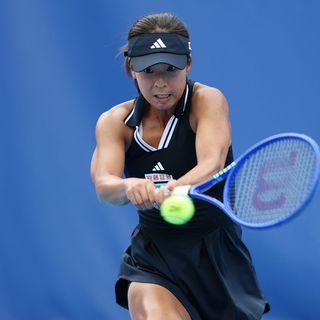
That run captures one of the main attractions of a WTA 250.
A player outside the most familiar group of contenders can put together a complete week and change the way her career is viewed.
The achievement requires more than one upset. It demands repeated preparation, recovery and execution against different opponents.
Krueger’s success gave the returning tournament a champion whose own story was moving into a new phase.
2024: A qualifier wins the championship
The next edition delivered another first-time winner.
Dutch player Suzan Lamens, ranked No.125 at the time, defeated Australia’s Kimberly Birrell 6–0, 6–4 in the 2024 final.

Both players had come through qualifying.
That added another layer to the result.
Qualifiers must earn their main-draw places before beginning the same championship challenge as the direct entrants. Their week involves additional matches, with the associated demands on recovery and preparation.
Lamens won seven matches across qualifying and the main draw, dropping only one set.
Her victory is a reminder that a draw’s seedings provide a starting picture rather than a guarantee of who will reach the final.
For spectators, following qualifying can mean discovering a championship story before it becomes the main headline.
2025: Fernandez brings the title to Canada
Leylah Fernandez won the 2025 championship by defeating Czech qualifier Tereza Valentova 6–0, 5–7, 6–3.

The match lasted two hours and 11 minutes. It gave Fernandez her fifth WTA singles title and her second championship of the season, following Washington. Valentova, then 18, was playing her first WTA final.
The score shows why the final required more than a dominant opening.
Fernandez won every game in the first set, but Valentova recovered to take the second. The Canadian then had to re-establish the advantage in a deciding set.
For Canadian tennis, it added a championship to a tournament connection that already included Bouchard’s 2013 final.
For Osaka, it continued a recent sequence of finals featuring emerging players alongside an established opponent.
What kind of tennis should fans watch for?
The outdoor hard-court setting makes the relationship between serve, return and court position particularly useful to study.
From a coaching perspective, watch what happens immediately after the serve.
Does the server receive a short ball and move forward? Does the returner land the ball deep enough to begin on equal terms? Can either player change direction without surrendering balance?
The tournament’s champions have brought different solutions to those questions.
A powerful serve can create an advantage. Early contact can take time away. Variation can force an opponent to strike from an uncomfortable position.
Rather than assuming one style will dominate, watch which player can repeatedly create the contact and court position she wants.
That makes a WTA 250 valuable viewing for recreational players as well as fans following rankings.
The current chapter
The WTA lists the 2026 main-draw dates as October 19–25. The organizer advertises the broader tournament window as October 17–25 at Morita Tennis Center Utsubo.
The event features 32 singles players and 16 doubles teams. As of October 22, its 2026 champion has yet to be decided.
Its appeal is already established.
There is Stosur’s repeated success, Bouchard’s early Canadian milestone, Hibino’s home-country celebration and the breakthrough championships of Krueger and Lamens. Fernandez’s victory added another Canadian chapter.
Together, those results explain the tournament’s place in the sport: an event where accomplished players can extend their records and emerging competitors can turn one exceptional week into a lasting achievement.
Comments
No comments yet.