

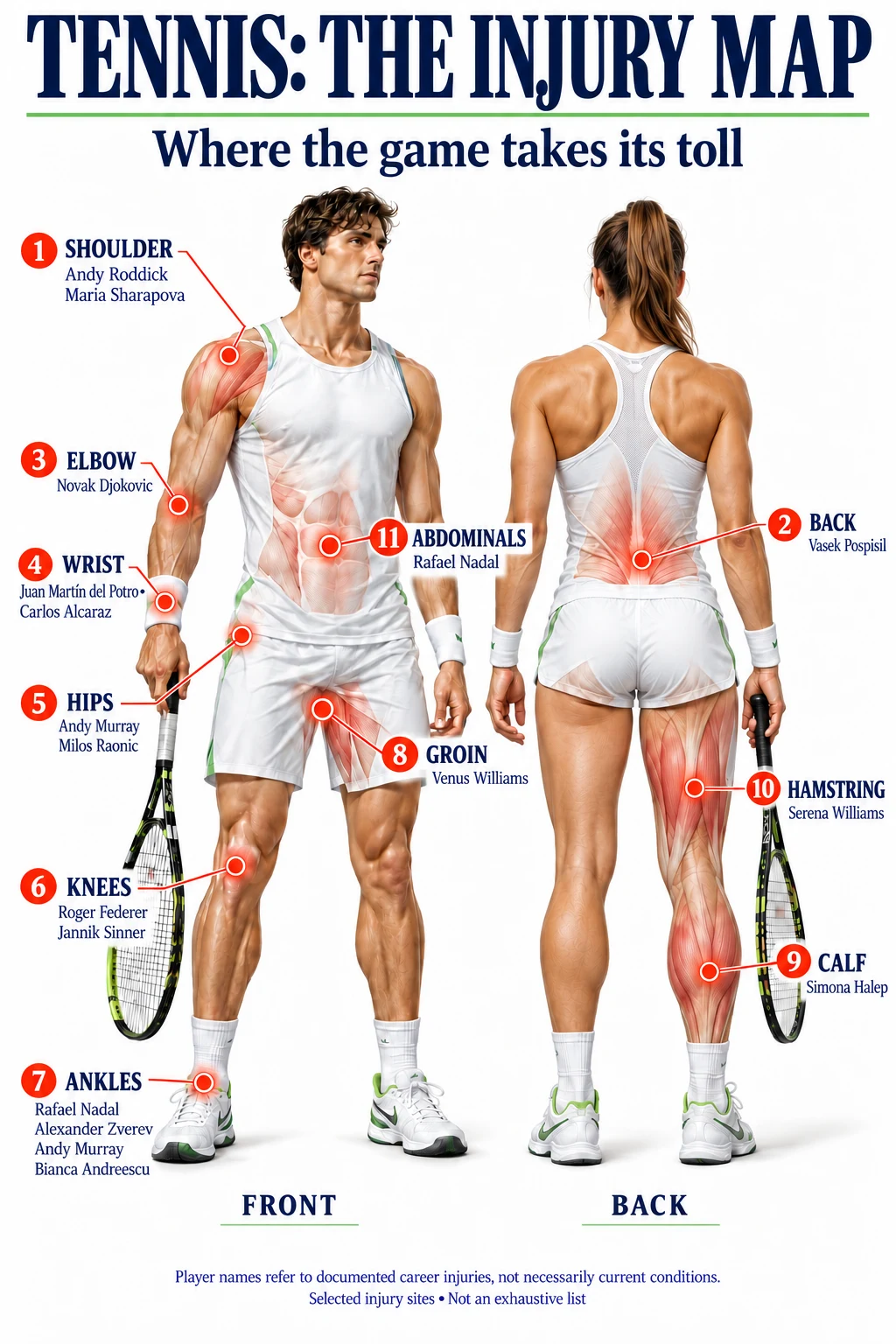
Tennis can build fitness, coordination and friendships that last a lifetime. It also asks a great deal of the body. A player must accelerate, brake, change direction, reach beyond a comfortable position and repeat powerful strokes, sometimes for hours. The serve alone requires the legs, hips, trunk, shoulder, elbow and wrist to work together. When one part cannot contribute effectively, another may have to absorb more work.
Even the greatest champions have discovered that skill, determination and access to exceptional medical care cannot guarantee an uninterrupted career. Roger Federer, Rafael Nadal, Novak Djokovic, Serena Williams and Andy Murray all lost important stretches of competition to physical problems. Juan Martín del Potro and Dominic Thiem show how injuries can alter a career permanently.
This article examines documented examples, the difference between time away and recovery, and practical ways to reduce injury risk. Player histories are selected episodes, not complete medical records. General recovery guidance cannot predict an individual result: the diagnosis, severity, treatment and demands of the intended return all matter. Information and current examples were checked on October 23, 2026.
Why the recovery clock can be misleading
Three different milestones are often described as recovery. The first is being comfortable in everyday life. The second is recovering enough strength, movement and tolerance to practise. The third is handling competitive tennis repeatedly, including unexpected movements and fatigue. Those milestones can be weeks or months apart.
A player might walk normally but struggle with a wide forehand. Another might rally comfortably but be unable to serve hard. Completing one practice does not establish that the body can cope with a long match followed by another match the next day. This is why a headline announcing a return does not mean that the athlete has recovered previous form.
An acute injury happens during an identifiable event, such as rolling an ankle. An overuse problem develops through repeated loading that exceeds the body’s ability to adapt and recover. Tendons, muscles, ligaments and bones behave differently, so the word injury alone tells us little about the likely timetable. AAOS describes these distinctions in its guidance on soft-tissue injuries and stress fractures. [1,2]
Professional time away also includes scheduling decisions, conditioning, setbacks and sometimes unrelated problems. Serena’s nearly year-long absence after Wimbledon 2021, for example, should not be presented as the standard healing time for a hamstring tear. Likewise, a successful rapid return by one champion cannot establish what is safe for another player.
Professional player injury examples
Selected episodes show how differently injuries affect careers. Time away is approximate competitive absence, not a prescribed healing period. Reference numbers refer to the source list at the end of the article.
| Player | Area | Documented episode | Return or career impact |
|---|---|---|---|
| Maria Sharapova | Shoulder | Surgery in 2008; recurring problems and another procedure in 2019. | Repeated interruptions; shoulder problems contributed to retirement. [4,5] |
| Novak Djokovic | Elbow and shoulder | Elbow absence in the second half of 2017; surgery in early 2018. | Won Wimbledon and US Open in 2018; separate shoulder retirement at US Open 2019. [6,10,11] |
| Juan Martín del Potro | Wrists and knee | Four wrist operations; knee absence from Jun 2019 to Feb 2022. | About 32 months before a farewell appearance; no sustained comeback. [13,38,39] |
| Dominic Thiem | Right wrist | Jun 2021–Mar 2022; about nine months away. | Returned to matches; recurring wrist problem central to 2024 retirement. [14,15] |
| Emma Raducanu | Both wrists and ankle | About eight months away in 2023. | Returned at Auckland in Jan 2024 after multiple operations. [16,17] |
| Vasek Pospisil | Back | Surgery in Jan 2019; missed the first six months. | Returned at Wimbledon in 2019. [23,24] |
| Paula Badosa | Spinal stress fracture | Lost the latter half of 2023. | Returned in 2024 with continuing management of back symptoms. [25,26] |
| Andy Murray | Right hip | Hip resurfacing in Jan 2019. | Won Queen’s doubles in Jun 2019, about five months later. [30,31] |
| Roger Federer | Knees | Six months away in 2016; later right-knee operations in 2020–21. | Won Australian Open 2017; later knee problems prevented full singles return. [36,37] |
| Alexander Zverev | Right ankle | Jun 2022–start of 2023; about seven months. | Three torn ligaments and surgery; later bone edema complicated return. [42] |
| Bianca Andreescu | Left ankle | Miami to Madrid, Mar–Apr 2023; about one month. | Returned after two torn ligaments; timetable specific to her episode. [43,44] |
| Simona Halep | Left calf | May–Aug 2021; about three months. | Missed Roland-Garros and Wimbledon; returned in Montreal. [50,51] |
| Serena Williams | Right hamstring | Jun 2021–Jun 2022; nearly one year. | Returned in Eastbourne doubles; absence is not a standard healing estimate. [55,56] |
| Venus Williams | Groin | Australian Open injury in Jan 2011; also missed Dubai. | Public reporting establishes missed events, not one exact healing interval. [34] |
| Rafael Nadal | Ankle hip and abdominals | Right-ankle surgery 2018; abdominal withdrawal 2022; hip-area surgery 2023. | Multiple separate episodes; returned in Jan 2024 after almost a year away. [17,33,46,57] |
Shoulder injuries and the repeated demands of serving
The shoulder must provide both movement and stability. Tennis places particular demands on the rotator cuff and muscles controlling the shoulder blade. Pain may involve a tendon, joint structure or another source; a player cannot identify the diagnosis simply because serving hurts. Research on tennis shoulders emphasises assessment of the whole movement chain, shoulder-blade function and muscle balance. [3]
Maria Sharapova is a major example. Her right shoulder required surgery in 2008, and she continued to face shoulder problems later in her career. The WTA documented another shoulder procedure in 2019 and identified repeated shoulder injuries and surgeries when reporting her retirement in 2020. Her history shows that an athlete can return to championship tennis while still needing long-term management of a vulnerable area. [4,5]
Novak Djokovic also belongs in the shoulder discussion. At the 2019 US Open, a left-shoulder injury forced him to retire against Stan Wawrinka in the fourth round. That was separate from the right-elbow problem that had interrupted his career earlier. Listing him under both regions is accurate, provided the episodes are clearly distinguished. [6]
Rotator-cuff surgery generally involves recovery measured in months. A minor overload episode and a surgically repaired tendon should never share one recovery prediction. AAOS notes that recovery after rotator-cuff repair takes several months and depends on the repair and rehabilitation. [7]
For prevention, serving volume deserves attention alongside technique. A player returning from a break should not make the first practice a prolonged session of maximum-effort serves. Shoulder conditioning should address endurance and control, with exercises selected for the individual. A coach can examine whether leg drive, trunk contribution or a difficult ball toss is forcing the arm to compensate. Painful movement should prompt assessment rather than increasingly forceful stretching. [3,8]
Elbow injuries and why Djokovic is not simply a tennis elbow case
Tennis elbow, or lateral elbow tendinopathy, usually involves pain around the outside of the elbow associated with the forearm tendon attachment. Gripping, lifting and wrist use can aggravate it. Symptoms often build gradually, making it tempting to dismiss them until everyday activities become uncomfortable. AAOS describes rest from aggravating activity, rehabilitation and other nonsurgical options as the usual starting point. [9]
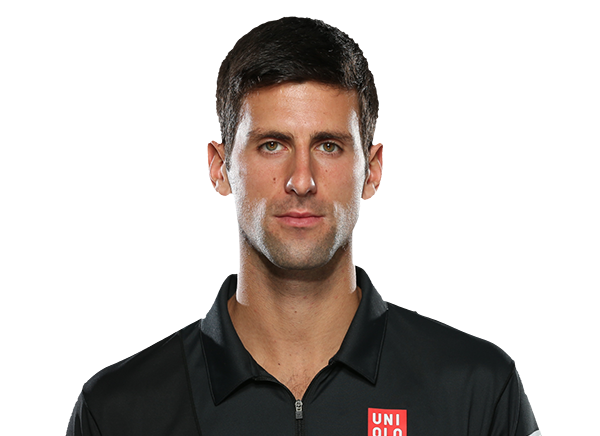
Djokovic missed the second half of 2017 with an elbow injury and underwent right-elbow surgery early in 2018. He later won Wimbledon and the US Open that year. His comeback was exceptional, but his publicly described elbow history should not automatically be labelled the same condition as a recreational player’s lateral tendinopathy. A body region is not a diagnosis. [10,11]
Persistent elbow problems may require months of management. AAOS discusses surgery only after prolonged unsuccessful nonsurgical treatment, often six to twelve months. That period is a treatment decision framework, not a promise that every case takes a year or requires surgery. [9]
Prevention starts with reviewing the combined load from tennis, work and the gym. Repeated gripping outside tennis can matter. Forearm strengthening should be progressive and matched to symptoms. Equipment and technique also deserve review: an unsuitable grip, an unnecessarily demanding racquet setup or repeated late contact may be relevant. No particular string or tension guarantees protection, and changing equipment cannot replace rebuilding capacity. [9,12,8]
Wrists and the careers of del Potro Thiem and Raducanu
The wrist transmits force while helping control the racquet face. Pain in this small region can affect serves, returns and both groundstrokes. Different injuries may involve tendons, ligaments, bones or joint structures. Treating every wrist problem as a simple sprain risks overlooking important differences.
Del Potro’s wrist history was extraordinary. ATP records list right-wrist surgery in May 2010, followed by three left-wrist operations in 2014 and 2015. His absences repeatedly interrupted his progress, yet he later returned to major finals and Olympic success. Those achievements should not obscure the years of uncertainty and rehabilitation behind them. [13]
Thiem sustained a right-wrist tear in June 2021 and missed approximately nine months, returning in March 2022. His ability to compete again did not restore the career he had before the injury. When he announced his retirement in 2024, the recurring wrist problem was central to the explanation. His case makes the distinction between returning to matches and recovering elite performance especially clear. [14,15]
Emma Raducanu underwent surgery on both wrists and an ankle in 2023. She returned in Auckland in January 2024 after roughly eight months away. Because several operations were involved, that absence should not be used as a standard recovery estimate for one wrist procedure. [16,17]
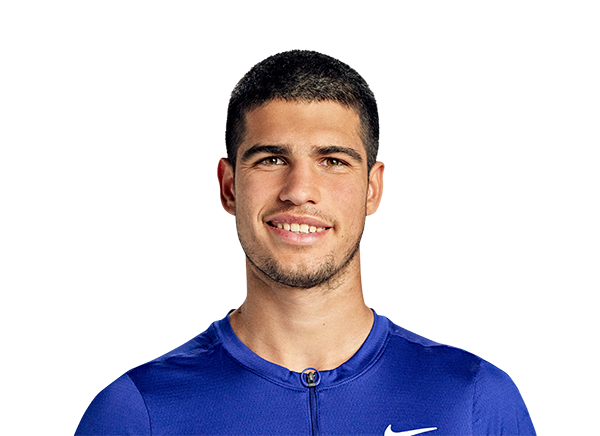
Carlos Alcaraz provides a recent example. Official US Open reporting records his return in August 2026 after a right-wrist injury had kept him out since April; his first match back came after 139 days. That is his documented competitive absence, not a universal wrist timetable. [18]
For significant wrist-ligament injuries, AAOS notes that healing and full recovery can differ substantially: a ligament may heal over eight to twelve weeks while full recovery can take six to twelve months. These figures concern wrist sprains generally, not the specific diagnoses of the players above. [19]
Players can reduce avoidable strain by building forearm capacity, reviewing stroke mechanics and avoiding abrupt increases in hard hitting. Persistent pain, swelling, reduced grip or pain after a fall warrants assessment. A brace or softer string setup may help selected players, but neither establishes that the underlying problem has healed. [19,20]
Back injuries and the importance of the whole trunk
Tennis repeatedly combines rotation, bending and extension. Back symptoms can come from muscles, discs, nerves or bone, and the distinction matters. A stress fracture in a young player requires a different approach from temporary muscular soreness. Persistent pain should not automatically be explained away as tightness. [21,22]
Vasek Pospisil underwent back surgery in January 2019 and missed the first six months of the season. Tennis Canada reported that his return came at Wimbledon. His case is a useful Canadian example of the extended interruption that a back problem can produce, even when an initial plan sounds relatively short. [23,24]
Paula Badosa sustained a spinal stress fracture in 2023 and lost the latter half of that season. Her subsequent comeback included continuing concerns about her back. The WTA’s reporting documents both the original injury and the challenge of returning to regular competition. [25,26]
Back prevention should include conditioning beyond abdominal exercises. Hip strength, trunk endurance, movement control and a serving action suited to the individual all deserve attention. The goal is to distribute effort through the body rather than repeatedly demand movement from a painful area. A clinician can determine which exercises fit the diagnosis; forcing the same stretching routine on every sore back is unlikely to be appropriate. [21,8]
Nerve symptoms change the urgency. Back pain with new bladder or bowel changes, numbness around the groin or saddle area, or severe or worsening weakness requires urgent medical assessment. These symptoms should not be managed as routine post-match stiffness. [27]
Hips and groins are neighbouring areas with different problems
Pain near the hip can arise from the joint or surrounding muscles and tendons. Groin pain may involve the inner-thigh muscles, but the location alone does not prove a strain. A player who feels a pinch, deep ache or recurring pain with rotation needs a proper assessment before selecting stretches or strengthening exercises. [28,29]
Andy Murray’s right-hip problems threatened his career. After an earlier operation, he underwent hip resurfacing in January 2019. By June he had returned to doubles and won the Queen’s Club title with Feliciano López. This was a remarkable outcome after a major procedure, but doubles required a different competitive workload from the singles tennis he hoped to resume. [30,31]
Milos Raonic also has a documented hip-surgery history: ATP lists right-hip surgery in 2011. His later foot and wrist operations illustrate another challenge in discussing careers: several different injuries can accumulate. It would be misleading to attribute every subsequent absence to the hip. [32]
Nadal underwent surgery in June 2023 involving his left psoas tendon, with an old left-hip labrum injury also addressed. The initial announced recuperation estimate was five months. He did not return to competition until Brisbane in January 2024, almost a year after his previous tournament. The original estimate and the eventual competitive return are different facts. [33,17]
Venus Williams is a documented groin example. The groin injury she sustained at the 2011 Australian Open also caused her to withdraw from Dubai. Contemporary reporting establishes the injury and missed events, but does not justify assigning one simple healing interval to her entire absence. [34]
For recreational players, hip and groin preparation includes gradually developed strength for lateral movement, controlled lunges and changes of direction. Players should earn larger ranges of movement rather than force painful end positions. HealthLink BC notes that even a minor groin injury may take four to six weeks or longer to heal. More severe injuries can take longer, and suspected joint or tendon problems need their own plan. [28,29]
Knees and the difference between a comeback and a lasting solution
The knee absorbs repeated braking, bending and pushing forces. Meniscus injuries, tendon problems and other conditions can all interrupt tennis, but their treatment and prognosis differ. Even two surgical procedures in the same region may impose very different restrictions. [35]
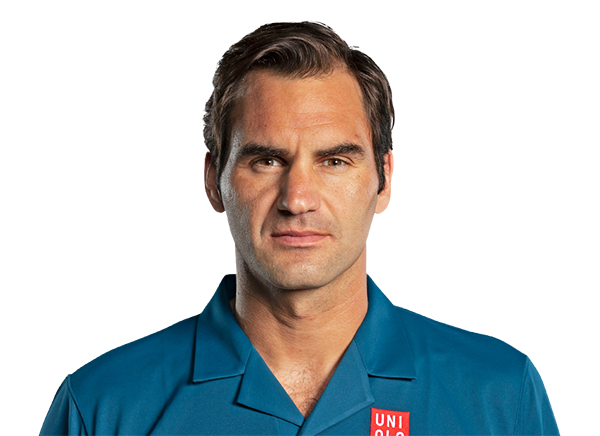
Federer’s experience contains two contrasting stories. Following his disrupted 2016 season and six months away from competition, he returned in 2017 and won the Australian Open. Later right-knee operations in 2020 and 2021 led to a much more difficult period. His final singles match came at Wimbledon in 2021, and he announced retirement in 2022 when a full singles return was no longer realistic. [36,37]
Del Potro’s career was eventually overwhelmed by his knee. Following patella injuries in 2018 and 2019, he underwent repeated operations and did not compete again until Buenos Aires in February 2022. That appearance, after approximately two years and eight months away, became an emotional farewell rather than the start of a sustained comeback. [38,39]
Jannik Sinner’s right-knee problem affected his 2026 schedule, including withdrawals from Cincinnati and the US Open. He subsequently announced in October that his season was over while he pursued treatment. A precise return date cannot be inferred from those announcements. His case should not be given a more specific diagnosis than the public evidence supports. [40]
Recovery after knee surgery depends on what was done. AAOS gives approximately three to six months of rehabilitation for meniscus repair, while other procedures have different pathways. Federer’s and del Potro’s experiences cannot be reduced to that generic range. [35]
Prevention should build the capacity to slow down as well as accelerate. Strength, balance and controlled tennis movement belong together. A player who can cycle for hours may have excellent aerobic fitness while remaining unprepared for repeated wide-ball stops. Swelling, locking, instability or repeated pain should be assessed before adding more demanding footwork. [35,41]
Ankles and the danger of assuming a sprain is minor
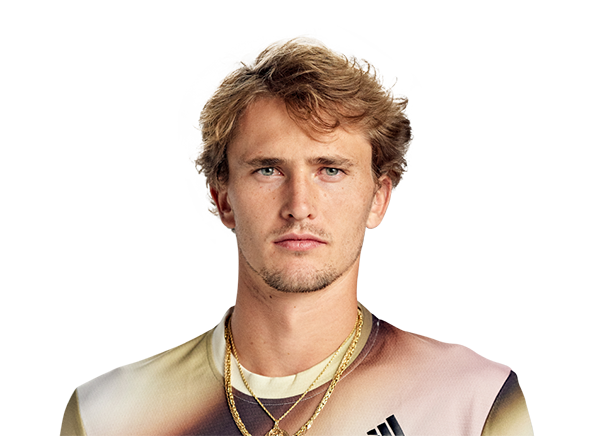
A rolled ankle can look ordinary while causing substantial ligament damage. Alexander Zverev tore three lateral ligaments in his right ankle against Nadal in the 2022 Roland-Garros semifinal and underwent surgery. He missed the remainder of that season and returned at the start of 2023. A later bone-edema problem complicated the process, so his absence was not simply an uncomplicated ligament-healing period. [42]
Bianca Andreescu tore two ligaments in her left ankle at Miami in March 2023. She returned in Madrid about a month later. The contrast with Zverev is striking, but does not mean their injuries, rehabilitation decisions or functional recovery were equivalent. [43,44]
Murray injured his left ankle in Miami in 2024, with ligament damage reported by ATP. Nadal also belongs on an ankle injury map: ATP records right-ankle surgery in November 2018 and earlier missed majors associated with a left-ankle injury. Nadal’s well-known chronic foot condition should be distinguished from these ankle episodes. [45,46]
AAOS describes rehabilitation lasting around two weeks for minor sprains and six to twelve weeks for more severe injuries. Complicated cases can take longer. Returning because swelling has improved, without rebuilding balance and sport-specific function, may leave a player vulnerable to repeated problems. [47]
Practical preparation includes appropriate tennis footwear, checking the court for loose balls and developing single-leg control. After a sprain, a clinician may recommend a brace or taping for selected activities. The rehabilitation should eventually include the movements tennis demands, not simply walking and straight-line jogging. [47]
Calf injuries and the deceptive first pain-free session
The calf contributes to pushing off, repeated split steps and changes of direction. A player may describe a sudden grab, a feeling of being struck or increasing tightness. Symptoms at the back of the lower leg can also involve the Achilles tendon or another condition, so a sudden injury deserves assessment rather than an assumed diagnosis. [48,49]
Simona Halep suffered a left-calf tear in Rome in May 2021. She missed Roland-Garros and Wimbledon, then returned in Montreal in August after approximately three months away. An injury sustained during an apparently unremarkable movement cost a defending Wimbledon champion the chance to defend her title. [50,51]
NHS guidance commonly describes calf-muscle healing around six weeks, with variation between individuals. Halep’s competitive absence was longer, illustrating why a general tissue estimate does not define readiness for elite movement. Rehabilitation must restore the ability to repeat calf work and tolerate tennis, not merely remove discomfort during ordinary walking. [48]
Preventive conditioning can include progressively loaded calf raises with both straighter and bent knees, with resistance and volume chosen for the player. Running, hopping and lateral work should be added gradually when appropriate. A player returning from a calf injury should avoid using one comfortable practice as proof of readiness for a full tournament. [48]
One-sided calf pain with unusual swelling or warmth needs prompt medical assessment, particularly when the cause is unclear. A blood clot can resemble a muscle problem. Associated chest pain or breathlessness is an emergency. [52]
Hamstrings and groins need strength as well as flexibility
Hamstrings help control the hip and knee during running, reaching and deceleration. Injury severity ranges from a mild strain to a major tear or tendon avulsion. The NHS explains that severe hamstring injuries can require weeks or months to heal, while surgical repair may involve a substantially longer rehabilitation. [53,54]
Serena Williams injured her right hamstring at Wimbledon in June 2021. She later withdrew from the US Open while recovering from a tear and did not return to tour competition until Eastbourne doubles in June 2022. That was nearly a year away. It is an important career example, but not evidence that all hamstring tears take twelve months to heal. [55,56]
The distinction between mobility and strength matters. Being able to stretch comfortably does not establish that a muscle can cope with sudden acceleration or a reaching movement under fatigue. Rehabilitation generally progresses from tolerable controlled exercise toward the speed and demands of the sport. HSS describes progressive physical therapy and notes that return after hamstring repair surgery can take six to nine months. [54]
For an uninjured player, a sensible programme develops hamstring and hip strength before introducing demanding running or wide lunges. After injury, exercises should be selected with a clinician; aggressive stretching of a fresh tear is not a shortcut. The objective is confidence and capacity across the range needed for tennis. [53,54]
Abdominal injuries and the serve that will not return

The stomach label on an injury map is better described as the abdominals when referring to the trunk muscles. These muscles help control rotation and the transition into and out of the serve. Abdominal muscle pain is different from an internal abdominal illness, and unexplained or severe symptoms require medical assessment.
Nadal’s withdrawal before the 2022 Wimbledon semifinal is a prominent example. He completed a five-set quarterfinal against Taylor Fritz despite abdominal trouble, but withdrew before facing Nick Kyrgios after confirming a tear. Winning a match did not establish that continuing the tournament was safe or feasible. [57]
A player recovering from an abdominal strain may rally before being ready to serve normally. That creates a particular trap: a successful baseline practice can make the remaining limitation seem small, although serving is fundamental to competing. A return plan should therefore assess the actual painful movement rather than treating all hitting as equivalent.
Prevention should address trunk control, strength and appropriate serving progression. Endless sit-ups alone do not reproduce the coordinated demands of tennis. As with shoulder problems, coaches and clinicians should consider the contribution of the legs and hips, movement through the trunk and overall workload. [8]
A realistic view of recovery time
Recovery ranges are useful for planning questions, not booking a guaranteed return date. General guidance places minor ankle rehabilitation near two weeks and more severe sprains around six to twelve weeks; calf healing is often described around six weeks; groin and hamstring injuries can require weeks or months. Repairs, complications and chronic symptoms can extend those periods considerably. [29,47,48,53]
Those figures cannot be compared directly without knowing what milestone each source describes. Tissue healing, completing rehabilitation, resuming ordinary activity and entering a tennis tournament are not interchangeable. A clinician may approve modified hitting while still restricting serving, sprinting or match play.
Nor can surgery be treated as one category. Meniscus repair, hip resurfacing, rotator-cuff repair and wrist procedures involve different tissues and restrictions. The safest question is therefore not simply how many weeks have passed. It is what the player can now do, what remains limited and how the body responds when the workload increases. [7,19,35]
Selected comeback timelines
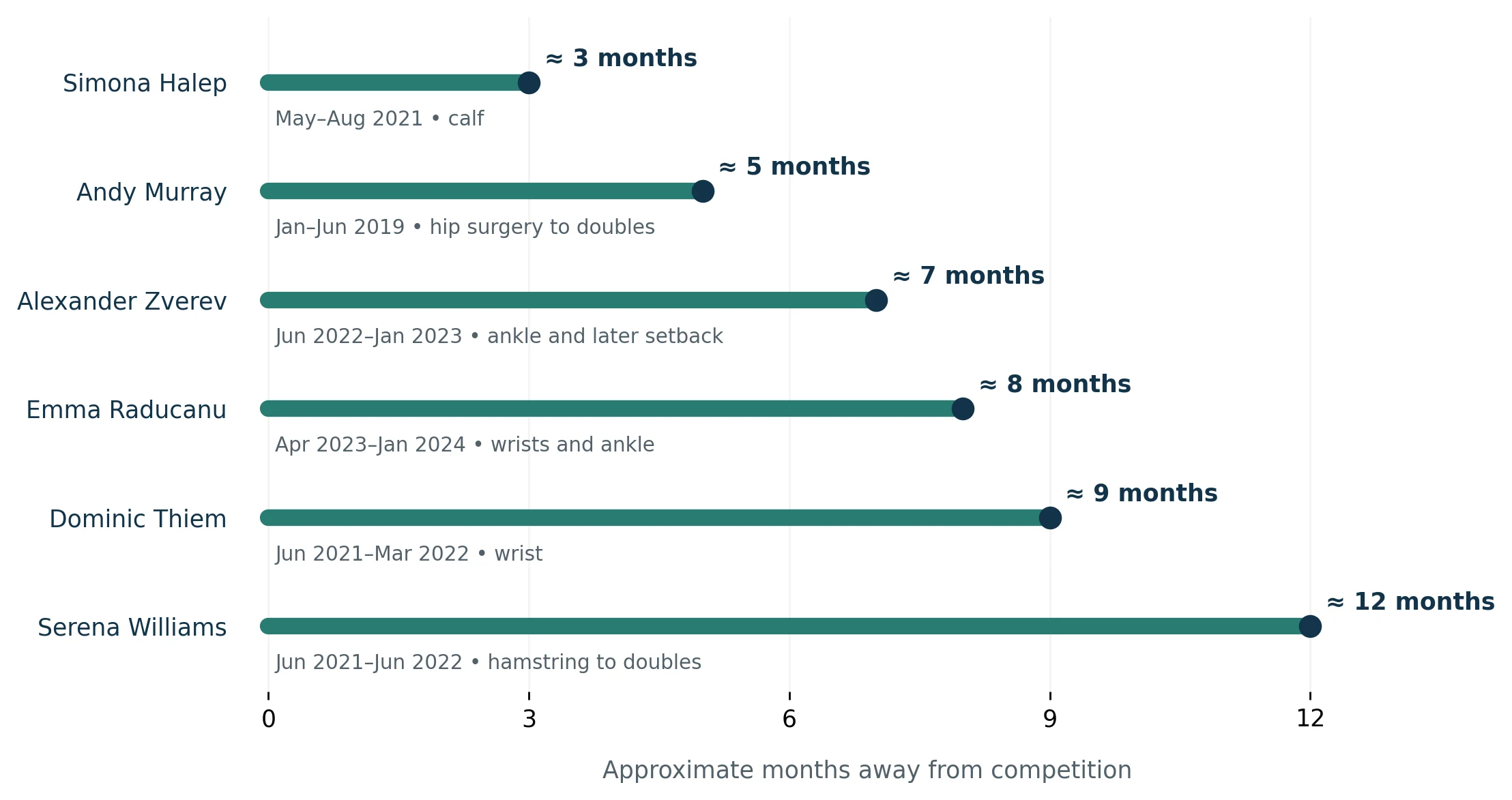
Figure 1 Rounded intervals from the documented episode or last competition to the first return. Murray’s line starts at surgery; Serena’s and Murray’s first returns shown here were doubles. Zverev had a later setback. These are not comparable injury grades or recommended recovery times. Sources [14,16,17,30,31,42,50,51,55,56].
General recovery guidance at a glance
These ranges describe different clinical milestones. They cannot establish fitness to play, and they are not forecasts for the named professionals.
| Condition or procedure | General guidance | What the range means |
|---|---|---|
| Minor ankle sprain | Around two weeks | A minor rehabilitation programme may be completed; full tennis demands still need assessment. [47] |
| More severe ankle sprain | Around six to twelve weeks | More extensive rehabilitation; surgery or complications can extend the process. [47] |
| Calf muscle strain | Healing often around six weeks | Muscle healing varies; repeated movement and tennis tolerance can take longer. [48] |
| Minor groin injury | Four to six weeks or longer | General healing guidance; severity and the actual diagnosis change the plan. [29] |
| Severe hamstring injury | Weeks to months | A broad range; complete tears and repairs have different pathways. [53] |
| Hamstring repair surgery | Six to nine months | HSS guidance for return to full activity under guided rehabilitation. [54] |
| Significant wrist ligament injury | Eight to twelve weeks for healing; six to twelve months for full recovery | AAOS distinguishes ligament healing from overall recovery. [19] |
| Meniscus repair | About three to six months of rehabilitation | Protecting the repair differs from rehabilitation after tissue removal. [35] |
| Rotator cuff repair | Several months | Recovery depends on the repair, rehabilitation and intended activity. [7] |
How to reduce risk before the next injury
No programme makes tennis injury-proof. The practical aim is to improve the relationship between the demands of the game and the player’s current capacity. A prevention plan should be realistic enough to continue through ordinary weeks, not just appear after a painful episode.
Manage the workload you actually perform
Count more than match hours. Serving practice, a tough singles session, gym work and a second match all contribute to physical demand. A player who changes several things together may struggle to identify what triggered symptoms. Keeping a simple record of activity, effort and the next morning’s response can make patterns easier to discuss with a coach or clinician.
After a holiday, illness or injury, begin below the previous workload and rebuild. Avoid treating the first available weekend as an opportunity to recover every missed hour. USTA guidance on overuse highlights insufficient recovery and abrupt changes in activity or playing surface as issues worth addressing. There is no universally safe percentage increase that applies to every athlete. [58]
Warm up for the movements tennis requires
A practical warm-up might take ten to fifteen minutes, with more time when conditions or the player require it. Start with easy movement, then add controlled side steps, comfortable lunges, trunk movement and shoulder preparation. Begin hitting gently and increase pace progressively. Introduce easy serves before harder ones.
This is an example sequence, not a mandatory routine or a proven injury-prevention prescription. The purpose is to prepare for the session and notice restrictions before points begin. The USTA supports dynamic preparation involving movement, coordination and gradually increasing activity. A few hard serves followed by the first service game is a limited substitute. [59]
Build strength beyond the hitting arm
A balanced programme should address the legs, hips, trunk, shoulder and forearm. Depending on experience and health, examples might include a squat or sit-to-stand, a controlled step-up, a hip-hinge exercise, calf raises, a rowing movement and appropriately light shoulder or forearm work. Exercise selection and progression should match the individual.
Balance and movement practice deserve their own space. Tennis requires a player to organise the body while reaching, stopping and recovering. A gym exercise can develop a useful quality, but that quality still has to be applied on court. USTA and AAOS resources support strength, conditioning and gradual preparation; they do not establish that one short exercise circuit prevents every tennis injury. [41,58,60]
Review technique and equipment without chasing a magic solution
A useful coaching question is whether a player can produce a stroke without repeatedly forcing one area. Video can help identify late preparation, difficult contact positions or a serve that becomes less coordinated as fatigue increases. Technical changes should be introduced progressively, especially when they alter the workload.
Equipment should suit the player’s strength and comfort. A racquet that is too demanding to manoeuvre, an unsuitable grip or a setup that aggravates symptoms warrants review with a knowledgeable professional. Shoes should suit tennis movement and the surface. The USTA emphasises that both technique and equipment adjustments can matter, while individual assessment remains essential. [61]
Protect recovery and adequate nutrition
Sleep, regular meals and sufficient energy support the work being asked of the body. A player cannot assume that a high-protein meal compensates for inadequate total food or repeated sleep loss. Hydration and heat management also deserve planning, particularly during longer sessions. USTA resources address nutrition, sleep and cooling as parts of player health and recovery. [62,63,64]
Repeated bone-stress injuries, unexplained fatigue or menstrual disruption require assessment. Low energy availability can affect athletes of any sex, and bone health should not be considered only after a fracture. Prevention advice should avoid turning sensible nutrition into restrictive eating or presenting supplements as protection against injury. AAOS discusses the relationship between energy availability and bone health. [65]
Junior tennis injuries and the growing athlete
Young players face the usual risks of sprains, strains and overuse, but they also have developing bones and growth areas to protect. A talented 13-year-old should not automatically follow a reduced version of an adult professional’s schedule. Training decisions need to reflect growth, experience, current symptoms and the combined demands of tennis, school sport and conditioning. AAOS notes that immature bones and surrounding tissues create distinctive injury patterns in young athletes. [76]
Growth related knee and heel pain
Osgood-Schlatter disease causes pain around the attachment of the patellar tendon to the upper shinbone, just below the knee. It can affect active adolescents during growth. Repeated jumping, running and bending may aggravate symptoms. The response should be an assessment and a plan for tolerable activity, rather than assuming that a child should train through every episode of knee pain. The diagnosis and severity determine whether practice needs modification or a break. [69]
Sever’s disease is a common cause of heel pain in growing children and involves the growth area at the back of the heel. It is different from an adult Achilles-tendon injury, even when the pain seems to be in a similar place. Running and jumping loads may need adjustment, with treatment directed by the clinician. Persistent heel pain or limping should not simply be blamed on footwear. [70]
Back pain and injuries that deserve early attention
Repeated lower-back stress can cause a bone-stress injury such as spondylolysis in young athletes. Persistent or recurrent back pain, particularly when serving or arching backwards, warrants assessment. Stretching harder or changing the serve without understanding the problem may delay appropriate care. AAOS describes how repeated extension and stress can affect the developing lower back. [22]
Shoulder, elbow and wrist symptoms also deserve attention. A young player’s pain should not be assigned the diagnosis of a famous adult solely because both point to the same body region. After an acute injury, difficulty using an arm or bearing weight needs assessment. Growth-plate injuries can occur where an adult might sustain a different injury, making accurate diagnosis important. [76]
Build a schedule the child can recover from
Parents and coaches should share one picture of the weekly load. A private lesson, academy practice, school match and tournament may be organised separately but are experienced by the same body. Count demanding serves and match play as well as hours on court. A growth spurt or a return after illness is a reason to review the plan rather than automatically keep increasing it.
The American Academy of Pediatrics recommends regular rest and time away from a single sport during the year. Its guidance advises against requiring young athletes to train or compete more than five or six days per week. It also stresses gradual training progression, adequate sleep and attention to physical and emotional warning signs. Rest should not become another compulsory training session under a different name. [71]
Strength work should be supervised and appropriate to the child’s development and experience. Movement quality, balance and broad athletic skills can be developed without copying an adult’s lifting loads. Racquets, courts and balls should fit the player’s stage. Pain, limping, fatigue or fear of reporting symptoms should trigger a conversation, not punishment for missing practice. [76]
Recovery should protect development as well as the next tournament
There is no single junior recovery time. A minor strain, a growth-related pain condition and a stress fracture need different plans. Return decisions should consider comfortable everyday activity, rehabilitation progress and the tennis movements required. A championship deadline cannot determine when a developing tissue is ready.
Watch for changes beyond the sore area: persistent fatigue, poorer sleep, declining enjoyment or a child who increasingly dreads practice may indicate that the overall programme needs review. AAP guidance connects excessive training with overuse injury and burnout. Keeping a child involved in tennis can include modified participation and contact with teammates while recovery takes priority. [71]
Senior tennis injuries and staying competitive for longer
Age alone does not determine what a player can do. Senior competitors vary greatly in strength, mobility, medical history and training experience. The useful approach is to assess present capacity and build from it. Regular activity remains valuable: the National Institute on Aging highlights benefits from aerobic exercise, strengthening and balance work for older adults. [73]
Tendons muscles and joints need individual attention
Ageing is associated with changes in muscle mass, strength, joint movement and tendon properties. Those changes can affect preparation and recovery, but they do not mean that injury is inevitable. AAOS notes that regular exercise can slow some age-related declines. Previous injuries and recent training history also help explain why two players of the same age tolerate different workloads. [72]
Areas worth monitoring include calf and Achilles symptoms, shoulder pain, elbow tendinopathy, back discomfort and hip or knee problems. These are useful screening areas, not a ranking of the most common senior tennis injuries. Osteoarthritis may coexist with an acute injury; a familiar ache should not automatically explain new swelling, instability or a sudden loss of function. [74,75]
Keep strength balance and tennis movement in the programme
Playing matches alone may not address every physical need. A senior player can benefit from a balanced plan that maintains strength in the legs, hips, trunk and upper body, alongside aerobic fitness and balance. Exercise selection should accommodate current conditions and experience. A supervised starting point may be appropriate when pain, a previous operation or uncertainty limits confidence. [73,74]
On court, prepare gradually for the speed and direction changes of the intended match. Rehearse controlled side steps, stopping and recovery before demanding wide-ball drills. Build serving volume rather than starting with repeated maximum effort. These are practical applications of the preparation and progression principles discussed earlier; they do not provide a guarantee against injury.
Adjust the workload without giving up competitive goals
A useful first step is to separate the most demanding sessions and observe the next-day response. There is no fixed rule that every player over 60 needs the same number of rest days. If soreness repeatedly worsens, movement deteriorates or recovery extends from one session into the next, reduce the load and seek advice about the cause. AAOS recommends gradual progression and preparation for older active adults. [67]
Doubles, shorter practices or modified drills can help manage workload when appropriate. They should not be described as automatically safe: doubles still includes sudden lunges, overheads and quick reactions. Similarly, good cycling fitness does not establish readiness for repeated lateral stops. The training needs to prepare the movements the player intends to perform.
Recovery should restore function rather than follow an age formula
A senior player should not automatically add a set number of weeks to a younger athlete’s timetable. The tissue involved, injury severity, treatment, previous function and any relevant health conditions are more useful guides. After surgery, the treating team’s restrictions take priority over a calendar-based return target.
A practical return asks whether the player can complete the intended session, move with control and recover acceptably afterwards. Persistent pain, worsening weakness, recurrent swelling or balance difficulties merit review. New exercise does not require blanket medical clearance for every healthy older adult, but existing symptoms or conditions may call for individual advice. The National Institute on Aging recommends gradual increases and adapting activity to health and ability. [77]
Making prevention part of an ordinary tennis week
The following example is a planning framework for an otherwise healthy recreational player, rather than a rehabilitation prescription. Start by identifying the most demanding tennis session of the week. That might be a singles match, a lesson with repeated serving or a competitive practice. Build the rest of the week around being prepared for that session and recovering from it.
A second tennis session could place more emphasis on controlled hitting, placement or doubles patterns. Strength work can fit elsewhere in the week, provided it does not leave the player too fatigued for demanding movement. There should also be room to reduce activity when sleep, work stress or symptoms make the original plan unrealistic. AAOS advises gradual preparation and avoiding excessive exercise, while the USTA stresses the value of allowing recovery between repeated loads. [41,58]
The practical detail is to record what happened, rather than what was intended. A planned gentle hit may turn into two hours of singles. A lesson may contain far more serves than a normal match. If a calf becomes sore the next morning, that information is more useful when the player can describe the actual workload. The record need not be elaborate: activity, duration, perceived effort and symptoms are enough to begin a productive conversation.
Cross-training also needs context. Swimming, cycling or walking may help maintain activity, but each still places demands on the body. An exercise that is comfortable for one injury may aggravate another. After surgery, permitted activity must follow the treating team’s restrictions. The question is whether an alternative supports the current plan, rather than whether it is generally considered a gentle sport. [1,7,35]
What to ask after a diagnosis
A clear explanation can prevent weeks of confusion. Ask which tissue is injured, whether the diagnosis is confirmed or still provisional, and what would change the treatment plan. Ask what activities are currently permitted, which should be avoided and whether there are specific signs that require reassessment. These questions help translate a medical label into everyday decisions.
Recovery estimates should be linked to a task. Does the estimate refer to walking, starting rehabilitation, hitting without movement or playing full singles? If surgery is proposed, ask what it aims to achieve and what restrictions follow it. A repair that needs protection cannot be rushed simply because pain has settled. AAOS guidance on meniscus and rotator-cuff procedures illustrates how the operation changes the rehabilitation pathway. [7,35]
It is also reasonable to ask how progress will be assessed. A useful plan has checkpoints rather than only an end date. The clinician might examine movement, strength, endurance and function, depending on the injury. The coach can then help design practices that respect the restrictions while preserving useful tennis skills. Neither needs to make decisions outside their expertise.
When treatment is progressing slowly, ask whether the diagnosis, workload or rehabilitation needs review. More exercise is not automatically the answer, and complete inactivity is not automatically the answer either. A stalled recovery is a reason to reassess the plan, not an invitation to copy an elite player’s treatment or purchase every recovery device advertised online.
The emotional challenge of returning
An injury changes more than training. Players may lose their regular social routine, worry about rankings or feel uncertain about a previously automatic movement. A former champion’s comeback can offer encouragement, but comparison can also create unrealistic pressure. Federer’s successful 2017 return does not establish that another player has failed if their knee responds differently.
Set goals that the player can influence: completing agreed rehabilitation, following serving restrictions, communicating symptoms and progressing practice when appropriate. Winning the first match back is much less controllable. Keeping contact with teammates and coaches can help maintain a connection to tennis during an absence without turning every conversation into a demand for a return date.
A player who remains afraid to load an injured area should discuss that openly with the rehabilitation team. Confidence can be rebuilt through appropriate, progressively demanding tasks. Persistent distress deserves support in its own right. The aim is a return the player can trust, rather than one achieved by concealing pain or pretending uncertainty has disappeared.
The stages of a supported return
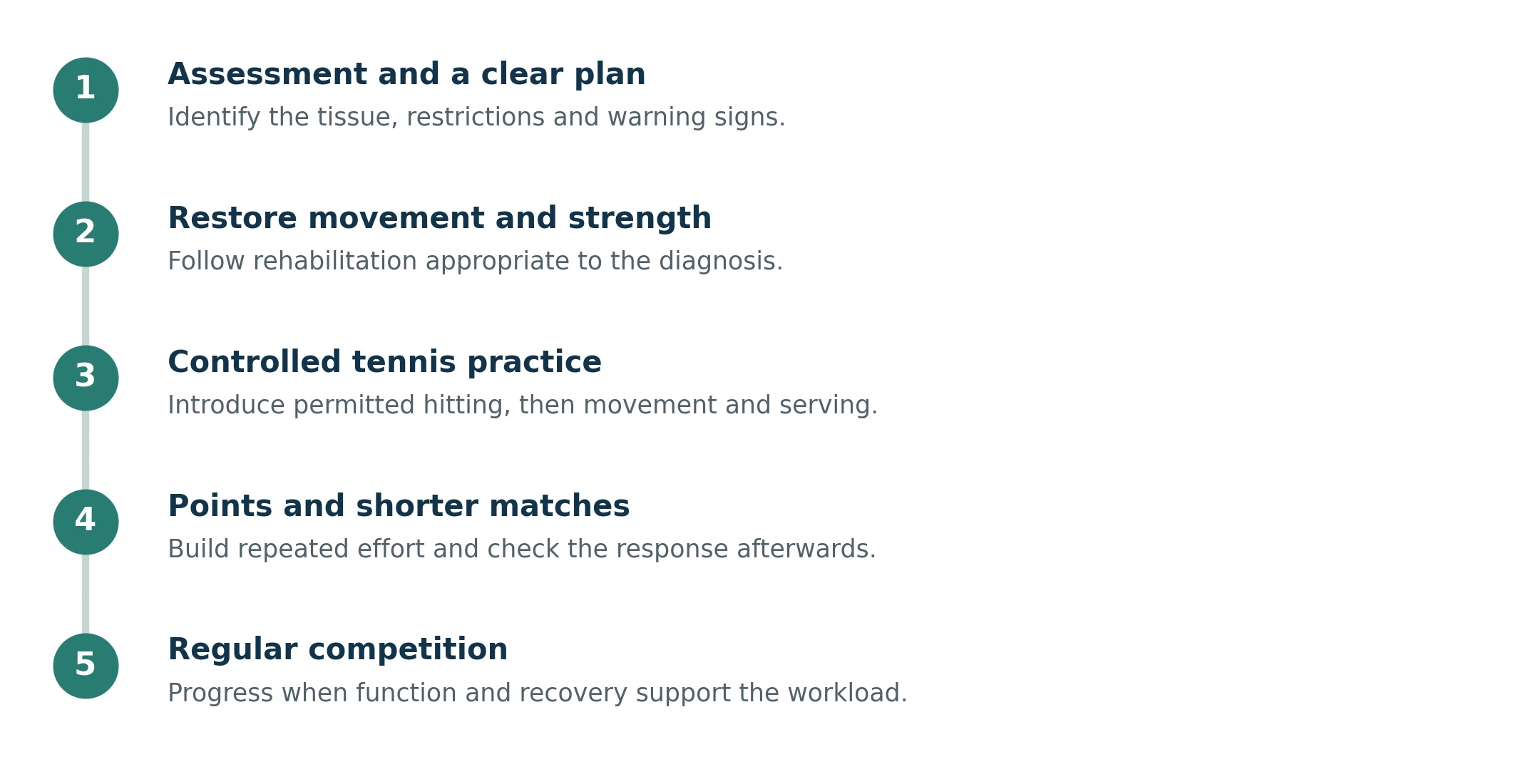
Figure 2 An illustrative progression, not a fixed protocol. The treating team determines the sequence, restrictions and progression for the diagnosis. A flare in symptoms or poor recovery should trigger review before adding workload. Based on rehabilitation principles discussed in [12,35,47,53,68].
Returning to tennis with a plan
A useful return progresses through the actual demands of the game. Depending on the injury, that may start with modified activity and controlled hitting, then add movement, serving, points and a shorter match. The order and restrictions should come from the diagnosis and rehabilitation team rather than a universal checklist.
Before unrestricted competition, discuss strength, movement, repeated effort and the response after practice. A player should also understand what symptoms mean stop, which activities remain restricted and what to do if the next morning brings swelling or increased pain. Confidence matters, but should be supported by demonstrated function rather than reassurance alone. Rehabilitation resources from AAOS emphasise progressive restoration of strength, flexibility and sport-related function. [12,53,68]
For a coach, this changes the definition of progress. A shorter session completed comfortably may be more useful than a full session that causes several lost days. A player who withdraws early from a worsening problem may preserve future opportunities. These are training decisions, not judgments about courage.
The careers of tennis champions show how much a comeback can mean and how uncertain it can be. Some players recover their best level; others compete again with lasting limitations; some never return. The useful lesson for the club player is to take symptoms seriously, prepare consistently and build a return around the body’s response. The reward is the opportunity to keep playing well for longer.
Sources
- [1] AAOS. Sprains Strains and Other Soft Tissue Injuries
- [2] AAOS. Stress Fractures
- [3] British Journal of Sports Medicine. Shoulder injuries in tennis players
- [4] WTA. Sharapova undergoes minor shoulder procedure withdraws from Miami
- [5] WTA. Maria Sharapova retires from tennis
- [6] US Open. Novak Djokovic looks ahead after retirement vs Wawrinka at 2019 US Open
- [7] AAOS. Rotator Cuff Tears Surgical Treatment Options
- [8] USTA. Tennis Technique Tennis Play and Injury Prevention
- [9] AAOS. Tennis Elbow Lateral Epicondylitis
- [10] ATP Tour. Novak Djokovics 22 Grand Slam Titles
- [11] US Open. 2018 US Open Spotlight Novak Djokovic
- [12] AAOS. Therapeutic Exercise Program for Epicondylitis
- [13] ATP Tour. Juan Martin del Potro biography
- [14] ATP Tour. Dominic Thiem biography
- [15] US Open. 2020 US Open champion Dominic Thiem to retire at end of 2024 season
- [16] WTA. Raducanu healthy hopeful as new season begins
- [17] US Open. Rafael Nadal Emma Raducanu make winning returns to start 2024
- [18] US Open. Carlos Alcaraz on return Once you step on the court you want to win
- [19] AAOS. Wrist Sprains
- [20] USTA and Mount Sinai. Tennis Wrist Injury Information
- [21] NHS. Slipped disc
- [22] AAOS. Spondylolysis and Spondylolisthesis
- [23] ATP Tour. Vasek Pospisil biography
- [24] Tennis Canada. Tebbutt Denis busts out
- [25] WTA. Badosa withdraws from Roland Garros after suffering spine injury
- [26] WTA. Badosa gives encouraging health update after Hua Hin retirement
- [27] NHS. Back pain
- [28] AAOS. Hip Strains
- [29] HealthLink BC. Groin Problems and Injuries
- [30] LTA. Andy Murrays comeback the timeline
- [31] US Open. 2019 US Open Spotlight Andy Murray
- [32] ATP Tour. Milos Raonic biography
- [33] ATP Tour. Rafael Nadal Successfully Undergoes Surgery
- [34] Tennis.com. Defending champion Venus pulls out of Dubai
- [35] AAOS. Meniscus Tears
- [36] ATP Tour. The Story Of Roger Federers Career
- [37] ATP Tour. Roger Federer biography
- [38] ATP Tour. Juan Martin del Potro A Night A Career To Remember
- [39] US Open. Juan Martin del Potro receives outpouring of love after potential final match
- [40] Erste Bank Open. Jannik Sinner forced to end his season early
- [41] AAOS. Safe Exercise
- [42] ATP Tour. Alexander Zverev excited to return at United Cup
- [43] WTA. Andreescu provides injury update
- [44] WTA. Wang vs Andreescu Madrid April 28 2023
- [45] ATP Tour. Andy Murray expects extended layoff with ankle injury
- [46] ATP Tour. Rafael Nadal biography
- [47] AAOS. Sprained Ankle
- [48] Northern Care Alliance NHS. Calf Strain Advice
- [49] AAOS. Achilles Tendon Rupture
- [50] WTA. Halep suffers calf tear in Rome unsure of recovery time
- [51] WTA. Collins ousts returning Halep in Montreal
- [52] NHS. Deep vein thrombosis
- [53] NHS. Hamstring injury
- [54] Hospital for Special Surgery. Hamstring Injury Prevention and Treatment
- [55] US Open. Serena Williams pulls out of 2021 US Open with torn hamstring
- [56] WTA. Serena returns to tour with doubles win in Eastbourne
- [57] US Open. Rafael Nadal withdraws from Wimbledon semifinal due to abdominal injury
- [58] USTA. Overuse injuries in tennis What you need to know
- [59] USTA. Dynamic Warm up and Flexibility Training for Tennis
- [60] USTA. Strength and Conditioning tips when at home
- [61] USTA. Picking the right equipment and preventing injuries
- [62] USTA. Nutrition for Tennis Eat and Drink to Win
- [63] USTA. Sleep matters
- [64] USTA. Cooling and hydration tips for tennis players
- [65] AAOS. Exercise and Bone Health
- [66] AAOS. Overuse Injuries in Children
- [67] AAOS. Sports Injury Prevention for Baby Boomers
- [68] AAOS. Hamstring Muscle Injuries
- [69] AAOS. Osgood Schlatter Disease
- [70] AAOS. Severs Disease Heel Pain
- [71] American Academy of Pediatrics. Preventing Overuse Injuries in Young Athletes
- [72] AAOS. Effects of Aging
- [73] National Institute on Aging. Health Benefits of Exercise and Physical Activity
- [74] AAOS. Seniors and Exercise
- [75] AAOS. Staying Active As You Age
- [76] AAOS. High School Sports Injuries
- [77] National Institute on Aging. Tips for Getting and Staying Active as You Age
Comments
No comments yet.