

Roger Federer won 218 points in the 2019 Wimbledon final. Novak Djokovic won 204.
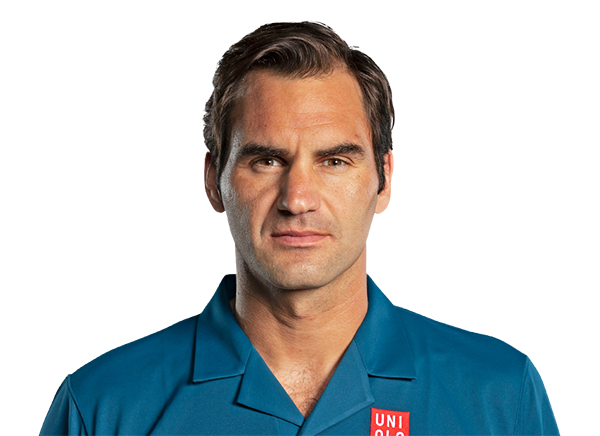
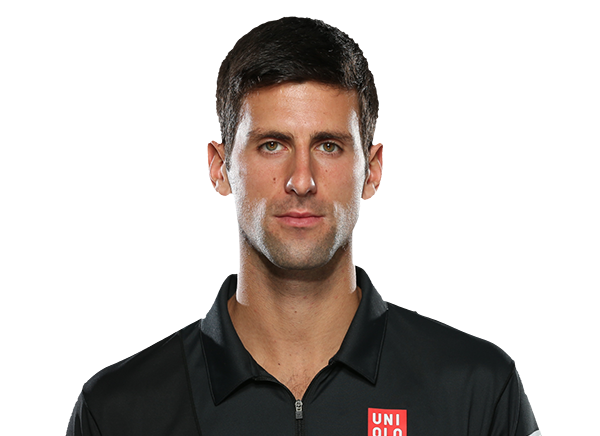
Federer still lost.
That 14-point advantage captures one of tennis’s most frustrating realities: a player can win more of the afternoon and still leave without the trophy. Federer also produced 94 winners to Djokovic’s 54, yet Djokovic won the championship in five sets.
At every level, players recognize a version of that experience.
You lead a set and a break. Your opponent appears uncomfortable. You are creating the opportunities and winning the longer exchanges. Then a service game slips away, a missed chance begins occupying your thoughts, and the match becomes a contest you no longer recognize.
What happened?
Sometimes the opponent improved. Sometimes your tactics changed without you noticing. Sometimes the scoreboard made your advantage look more secure than it was.
Understanding the difference is essential—because “I should have won” tells you much less than identifying why you did not.
Tennis rewards the distribution of points
In sports decided by accumulated scoring, building a substantial lead creates a cushion.
Tennis repeatedly resets the contest.
Once a game ends, surplus dominance does not carry into the next one. Winning a service game without losing a point earns the same game on the scoreboard as surviving several deuces.
Consider a simplified example.
Player A wins a set 6–0, taking every game at love. That produces a 24–0 advantage in points.
Player B then wins the next two sets 6–4, with every game decided at love. In each of those sets, Player B wins 24 points and Player A wins 16.
The final totals are:
- Player A: 56 points
- Player B: 48 points
- Match winner: Player B, 0–6, 6–4, 6–4
It is an extreme illustration, but the arithmetic explains the principle. Points must be assembled into games, and games into sets.
An overwhelming first set cannot purchase protection against a close defeat in the next two.
Federer’s Wimbledon loss shows the difference
Federer’s 2019 final against Djokovic provides a famous real-world example.
Djokovic won all three tiebreaks in his 7–6, 1–6, 7–6, 4–6, 13–12 victory. Federer’s larger margins in the second and fourth sets helped him finish ahead in total points and games, but those advantages could not overturn the three sets Djokovic secured.
Federer also held two championship points on his own serve in the deciding set. Djokovic survived both and eventually won the title.
The lesson is more precise than saying Djokovic “wanted it more.”
Federer created enough opportunities to win. Djokovic prevented him from completing the final step and won the deciding scoring sequences.
For club players, this changes the post-match conversation. Instead of counting memorable winners or recalling how comfortable the first set felt, examine the games that determined each set.
Where did the breaks happen? What happened in the tiebreak? How were the closing opportunities played?
Those questions reveal more than the overall impression.
A lead can change your decisions
Imagine a player leading 5–2 after repeatedly moving the opponent behind the baseline with deep cross-court forehands.
Serving for the set, that player begins guiding the ball. The forehand lands shorter. The opponent steps forward and starts directing the exchanges.
The leading player believes they are reducing risk. In practice, they have changed the conditions that created the lead.
The opposite mistake is equally recognizable.
A player reaches 30–30 while serving for the match and decides it is time to finish with something special: a bigger second serve, a sharper angle or a winner from behind the baseline.
Now the player has abandoned a successful pattern in favor of a lower-margin attempt.
These are different responses to the same problem: attention has moved from constructing the point to securing the result.
A useful question before serving is: What combination has been creating my advantage?
That might mean serving into the body and playing the next ball deep. It might mean making the opponent hit a running backhand before changing direction.
A clear pattern gives the player an action to execute.
Nadal changed the problem for Medvedev
Daniil Medvedev appeared close to taking command of the 2022 Australian Open final.

He led Rafael Nadal by two sets and held three break points with Nadal serving at 2–3, 0–40 in the third. Nadal escaped, extended the match and eventually won in five sets.

It is tempting to explain the entire reversal through Nadal’s determination. But the Australian Open’s statistical analysis identified concrete changes.
Nadal landed fewer than 55 percent of his first serves in each of the opening two sets, then raised that figure to 82 percent in the third. He also contacted a greater proportion of his forehands inside the baseline as the match progressed.
Importantly, the analysis found Medvedev’s shot speed and depth remained relatively steady. Nadal was taking a more assertive position rather than simply receiving weaker balls.
That distinction matters.
A player can lose apparent control because the opponent changes the contest. The explanation does not always begin with the leader becoming nervous.
For the player ahead, the practical question is: Is my opponent now doing something that my original plan does not adequately address?
The opponent is allowed to adapt
A club player might win the first set by returning from well behind the baseline and sending high, deep balls through the middle.
In the second set, the server begins using shorter angles and following selected serves forward.
The original return position now creates a different problem. The returner has more distance to cover and less opportunity to pass from a balanced position.
Continuing exactly as before may feel disciplined, but successful tactics require an opponent who is still vulnerable to them.
Look for specific changes:
Is the opponent returning closer? Serving more frequently to the body? Taking your cross-court ball earlier? Using a slice to alter the contact height?
A useful adjustment responds to that evidence.
If the opponent is attacking short balls, improve depth before attempting to hit harder. If a return position has become vulnerable, reconsider where you stand.
Changing everything at once makes it harder to identify what helps.
Gauff showed why power is not complete control
Aryna Sabalenka won the opening set of the 2023 US Open final against Coco Gauff, 6–2.


Gauff then won the next two sets, 6–3, 6–2. Sabalenka finished with 25 winners and 46 unforced errors.
The match illustrates why the player striking the more forceful ball is not necessarily controlling the whole contest.
Power can force an opponent into uncomfortable positions. But sustained defense can require the attacker to produce another difficult shot, then another.
From a coaching perspective, the important distinction is between attacking an opportunity and trying to manufacture a finish from an unsuitable position.
Consider a recreational player who drives an opponent wide, receives a low reply near the service line and attempts a sharply angled winner.
The attacking position is favorable. The chosen finish may still be unnecessarily difficult.
A firm approach into a larger target could preserve the advantage and make the next shot easier.
The question is whether aggression is improving the position or merely increasing the chance that the point ends immediately.
A missed opportunity can damage the next game
Losing a break point costs an opportunity.
Continuing to argue with yourself about it can interfere with the next opportunity as well.
Picture a returner missing a routine forehand at break point. Two minutes later, serving at 0–15, that player is still thinking about how the previous game should have ended.
The next point begins without a clear serve target.
This is a familiar competitive trap: treating the actual score as an injustice because it differs from the score you imagined.
A practical response is to make the review brief and specific.
“I attempted the line too early” is useful information. “I always throw these matches away” offers no instruction for the next point.
Identify the decision, choose the correction and return attention to the current score.
You cannot serve effectively from a game you believe you should already have won.
Match points still contain an opponent
Federer also held two match points while serving at 5–3, 40–15 in the fifth set of his 2011 US Open semifinal against Djokovic.
On the first, Djokovic struck a return winner. Djokovic ultimately escaped and won the match. The US Open later revisited that return as one of the tournament’s defining moments.
The example is valuable because it challenges an easy judgment.
A lost match point does not automatically prove the player holding it made a poor decision. The opponent can produce an exceptional response.
That does not remove the need for honest analysis. A double fault, a rushed forehand and an opponent’s clean return winner deserve different explanations.
At club level, separate three questions:
Was the plan sensible? Was it executed reasonably? What did the opponent do?
The result alone cannot answer all three.
Sinner and Alcaraz demonstrate how close is still unfinished
In the 2025 Roland-Garros final, Jannik Sinner led Carlos Alcaraz by two sets and later held three championship points with Alcaraz serving at 3–5 in the fourth.


Alcaraz survived and won the match in a deciding-set tiebreak.
Being one point from victory changes the opportunity. It does not remove the requirement to win that point.
For the player behind, the immediate task remains manageable: make the return, establish the rally or execute the next serve.
For the player ahead, imagining the handshake can add a distraction at precisely the moment the opponent is concentrating on survival.
A useful club-level cue is to give yourself an ordinary assignment at an extraordinary score.
Choose the serve location. Identify the likely reply. Prepare the next shot.
The match point already carries significance. Your instructions do not need to become more complicated because of it.
Momentum needs a practical explanation
When a lead disappears, “momentum changed” can describe the experience without explaining its cause.
Try looking for observable changes.
Did first serves stop landing? Did returns become shorter? Did one player begin recovering more slowly between shots? Did an opponent start taking the ball earlier?
Imagine a player leading 4–1 who loses two service games after repeatedly missing first serves. The immediate problem may be second-serve exposure.
Trying to “get the momentum back” is vague. Choosing a more reliable first-serve target gives the player something measurable to attempt.
Similarly, if groundstrokes are landing short, forcing the issue with a riskier winner may compound the problem.
Describe the change in tennis terms. Then choose a tennis response.
Closing requires continued construction
The temptation near victory is to treat the remaining points as an administrative task.
They are still competitive points against someone who can serve well, defend stubbornly, change tactics or strike a winner.
A player leading 5–3 does not need to become timid. Nor does that player need to prove courage by attempting a spectacular finish.
The useful goal is to continue creating favorable positions through repeatable decisions.
After a difficult loss, review three moments: the first clear change in the contest, the most important missed opportunity and the pattern used when trying to close.
Ask what was controllable at each stage.
Federer’s Wimbledon final demonstrates how total-point superiority can coexist with defeat. Nadal’s comeback shows how an opponent can actively reclaim territory. Gauff’s victory shows why absorbing pressure can matter as much as delivering it.
The scoreboard records the advantage you have earned so far.
Finishing the match requires earning what remains.
Comments
No comments yet.