

Jannik Sinner’s return is a question of readiness before it is a question of a tournament name. The Italian has ended his 2026 season to treat his knee, and the latest reporting describes rehabilitation rather than an established return to unrestricted tennis practice. January 2027 is a reported possibility, not an announced comeback date. [1, 3]
For supporters asking whether he is practising, what treatment he may be receiving and when they might see him compete again, the distinction between confirmed news, attributed reporting and general sports medicine is essential. This article was checked on October 25, 2026. It does not have access to Sinner’s medical records or a private training log.
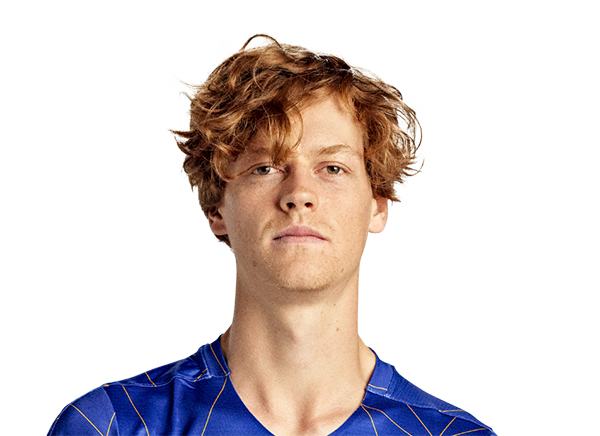
The latest position: what is confirmed, and what is reported?
| Question | Best-supported position as of October 25, 2026 |
|---|---|
| Will he play another ATP tournament in 2026? | He announced on October 6 that his season was over to undergo knee treatment. [1] |
| Which knee? | His August US Open withdrawal identified the right knee. [2] |
| Is he back in full tennis practice? | Not established by the sources checked. October 25 reporting describes gym rehabilitation; October 24 reporting raised possible court tests for the following week. [3, 4] |
| What is the diagnosis? | Official updates describe a knee issue/treatment. La Gazzetta dello Sport reports iliotibial-band inflammation; this article has no direct clinical confirmation. [1–4] |
| When is his next tournament? | No named first tournament was confirmed in the sources checked. An Australian return in January 2027 is reported as a possibility, conditional on recovery. [4] |
How did the absence develop?
The ATP reported Sinner’s decision to end his season on October 6. His last competition had been Wimbledon in July. The absence subsequently extended through the North American and Asian swings, and the season-ending announcement removed the expectation that he would return during the European indoor tournaments. [1]
An important earlier checkpoint came in August. In announcing his US Open withdrawal, Sinner explained that a return to the court in Monte Carlo had shown that his right knee still needed more recovery time. That was evidence of a practice attempt at that point, not proof that he had resumed sustained training by late October. [2]
Dates matter when reading injury stories. A photograph, video or headline saying that a player is back on court can remain in circulation long after the session it describes. An August hitting session cannot answer an October question without a newer update. The most useful injury timeline records both the date of the activity and the date of the report.
Is Sinner practising now?
La Gazzetta dello Sport’s October 25 report places him in Monte Carlo continuing treatment and gym rehabilitation, with Darren Cahill and Simone Vagnozzi around him. Its account says there is still recovery and gym work before a return to tennis. The previous day, the newspaper reported that court tests might take place the following week. These are attributed reports; possible tests are not completed tests, and neither report establishes unrestricted match-intensity practice. [3, 4]
The practical answer is therefore narrower than a simple yes or no: rehabilitation activity is reported, but a confirmed return to full tennis training was not established in the material checked. A gym visit, a coach’s presence and a short on-court assessment each tell a different story. They should not be combined into a claim that he is ready for a tournament.
If a fresh practice clip appears, useful questions include: when was it filmed, how long was the session, was movement restricted, and did the player or team describe it as a test or normal training? A few forehands fed directly to a player do not show how the knee responds to a wide ball, a sudden stop or repeated demanding sessions.
What is known about the knee problem?
The safest official description remains a right-knee problem requiring treatment. Italian reporting has been more specific, identifying inflammation associated with the iliotibial band. That description should remain attributed rather than being presented as a diagnosis made by Tennisin60. The public information reviewed does not establish an ACL tear, a meniscus tear or a completed knee operation. [1–4]
For general context, the American Academy of Orthopaedic Surgeons describes the iliotibial band as connective tissue running along the outside of the thigh between the hip and knee. IT-band syndrome can cause activity-related pain around the outer knee. Its assessment depends on clinical history and examination, with imaging sometimes used to investigate other causes. This explains the term in the reporting; it does not independently verify Sinner’s condition. [5]
An extended absence does not, on its own, identify the injured structure. Nor does the word inflammation tell an outside observer how much load a particular athlete can tolerate. Without the treating team’s examination and findings, assigning a severity grade or a recovery deadline would add certainty that the evidence does not provide.
What treatment is being reported—and what does PRP mean?
The October 25 Gazzetta report describes muscle strengthening and platelet-rich plasma treatment, with specialist involvement in his recovery. This is newspaper reporting, not a published treatment statement from Sinner’s clinicians. The article does not establish the number of treatments, injection site, preparation used or a clinical outcome. [3]
Platelet-rich plasma, commonly shortened to PRP, is prepared using a patient’s blood to produce a platelet concentrate. AAOS explains that evidence for its effectiveness differs across conditions. Evidence concerning one tendon problem or knee osteoarthritis cannot simply be transferred to another diagnosis or athlete. A report that someone is receiving PRP is not evidence that a particular return date is now predictable. [6]
It is also inappropriate to describe a treatment as a guaranteed repair. Whether it is useful depends on the actual diagnosis, treatment objectives and response. Sinner’s medical team is responsible for those decisions. There is no verified basis in the sources reviewed to announce that surgery has been scheduled or performed.
What could rehabilitation involve? General principles, not his private programme
The following framework explains common rehabilitation goals. It is not Sinner’s confirmed programme, a prescription for readers or a timetable for his return. A professional’s plan can change as symptoms and function are reassessed.
Managing aggravating activity. For IT-band syndrome generally, AAOS describes nonsurgical care and gradual return to activity as the usual approach. The purpose of reducing a provocative load is to allow recovery while the clinician determines which activities are appropriate. That does not establish that every athlete should stop all exercise, or that a fixed period of rest resolves every case. [5]
Restoring strength and movement. AAOS’s knee-conditioning guidance includes the thigh and hip muscles and emphasises supervised exercise selection, strength and flexibility. It advises discussing exercise pain with the treating professional. A publicly available conditioning handout can explain the aims of rehabilitation, but it cannot determine Sinner’s weights, exercise selection, repetitions or daily workload. [7]
Control on one leg. Dartmouth-Hitchcock’s general IT-band exercise guidance addresses hip strength and single-leg stability, with progression dependent on good technique and the absence of resulting symptoms. This helps explain why rehabilitation may involve more than the painful spot itself. It does not show that Sinner has a particular weakness, or that he is performing the exercises in that handout. [8]
Rebuilding tennis exposure. A published interval-return-to-tennis framework describes a sequential, criteria-based progression rather than relying only on elapsed time. Its lower-limb considerations include mobility, flexibility, strength, conditioning and control. The clinical principle is to establish capacity before increasing the demands of tennis; it is not a universal calendar that can be applied from a news report. [9]
Why hitting a ball is different from being tournament-ready
The ITF describes tennis as a sport requiring starts, stops, turns, jumps, slides and recovery in different directions. A controlled hitting session can restrict those demands. A competitive opponent cannot be instructed to avoid sending the next ball wide. [10]
As a tennis illustration—not a report of Sinner’s training—a player might first hit predictable feeds, later cover a larger area, and eventually practise less predictable points. The relevant question changes at each stage: from tolerating a stroke to tolerating movement, then to handling the decisions and repeated efforts of a match. The exact sequence must be chosen for the individual. [9]
Sports-medicine consensus distinguishes return to participation, return to sport and return to performance. That distinction is particularly useful here. A player can participate in modified activity before returning to competition, and entering a tournament does not guarantee an immediate return to his previous standard. Physical and psychological readiness both belong in the decision. [11]
When might we see him in tournaments again?
The confirmed position is that Sinner ended his 2026 season. La Gazzetta’s October 24 report discusses a possible official return in January and Australia as the likely setting being considered. It also raises a possible late-December exhibition appearance if recovery permits. Neither possibility should be promoted into a confirmed booking or medical clearance. [1, 4]
| Possible development | What it would mean | What it would not establish |
|---|---|---|
| A new court test | An assessment of response to selected tennis activity | A confirmed tournament date |
| Sustained, progressively demanding practice | More evidence of tennis-specific preparation | A guarantee against recurrence |
| A named tournament announced by Sinner or his team | A stated competition plan | Certainty that he will start or finish the event |
| An exhibition appearance | Participation in that exhibition | An automatic return to the ATP Tour or previous performance level |
January 2027 is consequently a reasonable reported scenario to discuss, but it remains conditional. Naming the Australian Open as his guaranteed first event would go beyond the evidence checked. A preparation event, a later return or a further adjustment cannot be ruled in or out from the current public information.
The most informative next update would describe completed tennis training and a response to it, followed by an explicit competition plan. Until then, counting weeks since the last match creates a countdown without knowing the starting clinical criteria.
What coaches, players and parents can learn
The coaching lesson is about the quality of the question. Instead of asking only whether a player has picked up a racket, ask what activity has actually been completed and what remains restricted. Instead of treating every photo as a comeback announcement, look for a dated statement describing the next step.
Recreational players should also avoid copying an elite athlete’s reported treatment. Similar pain locations do not establish identical diagnoses, and access to intensive support does not make a professional’s programme suitable for a club player. Persistent or worsening symptoms need individual clinical assessment, rather than a return date borrowed from a headline.
For Sinner, the immediate story is rehabilitation and uncertainty about the first match back. The next meaningful milestone will be what he can repeatedly do on court, together with what his team announces—not a prediction made from an old practice clip.
Follow Sinner on Tennisin60
Visit [Jannik Sinner’s player card](/players/jannik-sinner), the [ATP schedule and drawsheets](/schedule/men) and [My Tennis in 60](/my-tennis). This article is an October 25 snapshot; later official announcements may change the position described here.
Medical disclaimer
This article is for general educational purposes and does not replace professional medical advice, diagnosis or treatment. Always consult a qualified healthcare professional about a suspected injury, symptoms, treatment, rehabilitation or return to sport. Recovery varies between individuals, and the athlete examples and timelines are not personal medical recommendations.
Sources
- [1] ATP — Sinner ends 2026 season, October 6
- [2] ATP — right-knee issue and US Open withdrawal, August 21
- [3] La Gazzetta dello Sport — reported treatment and gym rehabilitation, October 25
- [4] La Gazzetta dello Sport — possible court tests and return scenarios, October 24
- [5] AAOS OrthoInfo — iliotibial-band syndrome
- [6] AAOS OrthoInfo — platelet-rich plasma and evidence limitations
- [7] AAOS OrthoInfo — supervised knee conditioning
- [8] Dartmouth-Hitchcock — general IT-band exercise guidance
- [9] Hospital for Special Surgery authors — Interval Return to Play Programs for the Tennis Athlete, 2021
- [10] ITF — science, medicine and tennis movement demands
- [11] Bern return-to-sport consensus statement, 2016
Comments
No comments yet.