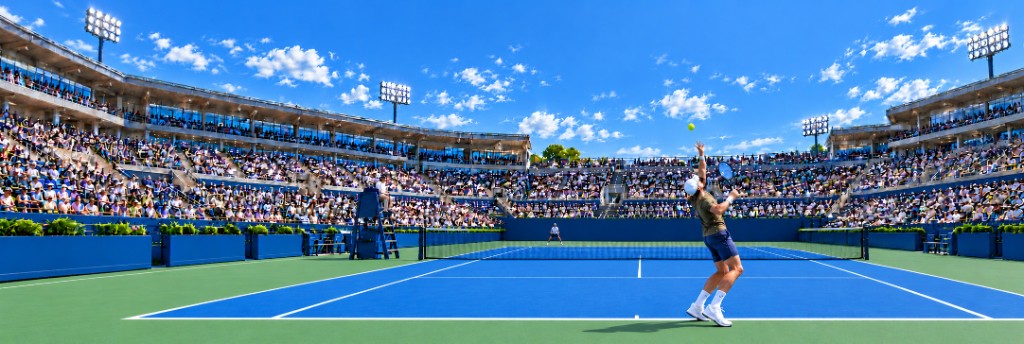
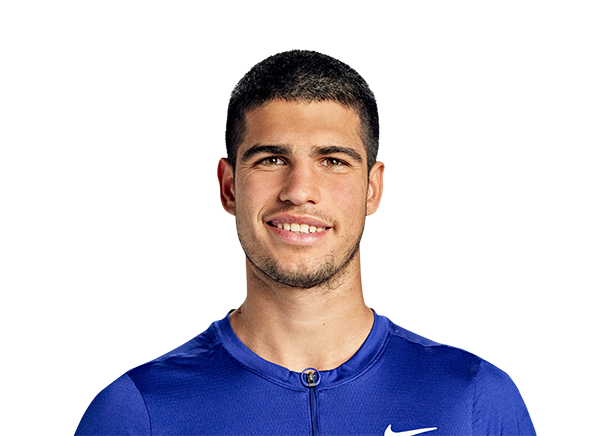
Speaking at the US Open in September, Alcaraz said he is already planning more breaks in 2027. He called the current calendar “impossible” and said he needs longer periods away from competition to stay healthy.
“It’s impossible to play them all,” he said.

Jannik Sinner’s prolonged absence has made the same point from the other side of the draw. The world No. 1 has been out since late June with a knee injury, missing the North American hard-court swing, including the US Open and the China Open in Beijing. On October 3 he also withdrew from the Shanghai Masters, extending an absence that began after his Wimbledon victory in July.
Neither Sinner’s knee injury nor Alcaraz’s wrist problem is proof, by itself, that the calendar caused the injury. Tennis bodies break down for many reasons. But when the two best players in the world are both talking about recovery, and one of them has been unable to return for months, the schedule stops looking like a background issue.
A calendar with little breathing room
The ATP’s published 2026 calendar shows how little room there is. The season runs from early January through the ATP Finals and Davis Cup Finals in late November. In between are nine Masters 1000 events, seven of them using the expanded 12-day format, plus four Grand Slams and the rest of the tour.
Players do not enter every event. The calendar still has to be survived by the people who do. A 12-day Masters is not a one-week stop. It is nearly two weeks in one city, with best-of-three matches stacked across a longer draw, then a flight to the next continent.
Longer tournaments also mean more nights, more recovery squeezed between matches, and more pressure on the players who keep winning. The deeper a player goes, the less time he has before the next event begins.
The burden extends beyond the ATP. Grand Slams set their own dates. Davis Cup and the United Cup sit on the calendar too. The ATP can adjust its own events, but it cannot, on its own, redesign the weeks owned by the Slams and the team competitions.
Success creates its own workload
Tennis has an unusual problem: the reward for winning is more tennis. A player who reaches the final of a Masters 1000 has just played a week and a half of high-intensity matches. The player who lost in the first round has had days to rest, travel, and prepare for what comes next.
An early-round loser can treat the following week as a reset. A champion often treats it as a layover. That gap is not a flaw in the scoring system. It is the structure of a calendar that keeps adding events without adding weeks.
The ATP has acknowledged the tension. In an August 2025 interview, ATP chairman Andrea Gaudenzi said the tour wants a longer off-season and that the major events are the ones that matter most to fans. He also said players are free to manage their own schedules.
Both arguments can be true. A longer off-season would help. So would a season built around the events people actually watch. And players do choose which tournaments to enter.
Yet freedom to skip events is not the same as a schedule that leaves room to recover. The top of the game is still pulled toward every Masters 1000, every Slam, and the late-season finals. Sitting out is a choice with ranking points, appearance fees, and momentum attached to it. The calendar makes the healthy choice expensive.
What should change?
A more sustainable calendar would protect the weeks between the biggest events, not just the events themselves. That means real recovery blocks, travel sequenced so players are not crossing continents overnight, and fewer weeks that end with a final on Sunday and a first-round match on Tuesday. It also means giving the players who go deepest a way to step back without treating a missed event as a penalty.
Those changes require more than a single quote from a star. The ATP, the Grand Slams, and the team competitions all own pieces of the year. None of them can fix the congestion alone, and none of them will give up a week without a reason. The reason is already on the court: the two best players in the world have spent large parts of this season injured, and the player who came back said the schedule is impossible.
Alcaraz’s warning matters because it came from someone who just proved he can still win a major. He was not asking for an easier sport. He was asking for enough time between the parts of it that already demand everything. Sinner’s absence shows what happens when that time runs out.
If the calendar regularly removes the players fans most want to see, it is not protecting the product. It is spending it.