At 25, a player can already have spent ten years chasing a major. At 30, the question gets sharper: if the first one has not come, how often does it still come?
Tennis in 60 looked at archived Grand Slam results and found that a first singles title is already uncommon well before most careers end. Among titleless players who were still in a major main draw at age 25, about 1.5 percent of the men and 1.9 percent of the women later won one.
There is no birthday when the chance disappears. Those percentages describe a wide historical group. They are not the personal odds of a player in the draw this week.
The count uses archived ATP and WTA results compiled by Jeff Sackmann. It follows players born from 1960 through 1985, and their recorded major results through the end of 2025. Stopping the birth years there gives each player a long stretch in which a breakthrough could show up. It keeps today’s young contenders from being counted as people who never won.
At each age, the group is players who appeared in a Grand Slam singles main draw and had not won a major before their first tournament at that age. A success is a first title at that tournament or at any major after it.
What the ages show
At 20, 25 of 373 men later won a first major, about 6.7 percent. For women the figure was 15 of 473, about 3.2 percent.
At 25, it was 8 of 517 men, about 1.5 percent, and 7 of 361 women, about 1.9 percent.
At 27, 5 of 408 men, about 1.2 percent, and 6 of 238 women, about 2.5 percent.
At 30, 1 of 218 men, about 0.5 percent, and 1 of 98 women, about 1.0 percent.
Each age is a different group. These are results observed through 2025. They are not a forecast, and they are not a rate for every professional.
The stark part is how seldom a first major arrived for titleless players who were still getting into the biggest draws in their mid-20s. Reaching those draws is already an achievement. Winning seven matches in that field is a much higher bar.
The same table pushes back on the idea that women have to win young or miss their chance. In this sample, women still without a major at 25, 27, and 30 converted slightly more often than the men at those ages.
That is not a general advantage for older women. The number of eventual champions is small, and the groups come from different generations and different fields. The women’s rate moving from 1.9 percent at 25 to 2.5 percent at 27 is also not evidence that getting older improves the odds. Players who are still in major draws later are a selected group. Others have already left.
The late first titles

Stan Wawrinka was 28 when he won his first major, the 2014 Australian Open. He went on to win three. His career is the example of a late breakthrough that became more than one extraordinary fortnight.
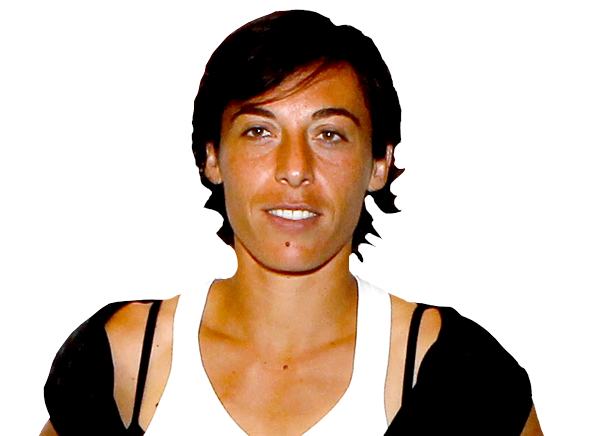
On the women’s side, Francesca Schiavone won Roland-Garros at 29. Li Na won her first major there at 29 the next year. Flavia Pennetta was 33 when she won the 2015 US Open. These were first titles, not another trophy for someone who had already won a major.

Angelique Kerber won her first Grand Slam at the 2016 Australian Open at 28, shortly after her birthday, beating Serena Williams in the final. She won the US Open later that year and Wimbledon in 2018, and finished with three major singles titles. A first title in the late 20s can be the start of a player’s best stretch, not the end of it.

Madison Keys added a recent case by winning the 2025 Australian Open at 29. She had reached the US Open final in 2017, and it took more than seven years to turn a major final into a title.
Kerber, born in 1988, and Keys, born in 1995, sit outside the 1960–1985 birth years in the count. Their titles show that later breakthroughs still happen. They are not inside the percentages above.
A first title and another title are different facts. A champion winning again in their 30s is a story about lasting. A player winning a first major at that age is up against a different historical pattern.
When it is late, and when it is not a verdict
In this group, a first major was already uncommon among titleless main-draw players at 25, and exceptionally rare at 30. That is not a reason to hand every player the same percentage.
Ranking, earlier deep runs, health, surface, and the field in front of them all change the reading of one person. A regular contender and a player who is trying to win a first-round match can sit in the same broad table and still be in very different matches.
For a coach, the useful version is to be plain about how hard it is without turning an average into a sentence on someone’s career. A major is also only one way to measure a professional life.
The window can narrow. The late champions show that it does not shut on a fixed date.
How the count was made
Tennis in 60 used Jeff Sackmann’s ATP and WTA annual match files and player birth dates from an archival mirror. The count is singles main-draw majors only. Players needed a known birth date from January 1, 1960, through December 31, 1985. Outcomes run through 2025. At each whole age, the anchor is the first recorded major that starts between that birthday and the next. Players who had already won a major are left out. A first title at the anchor tournament, or at any later major through 2025, counts as a success. Age is taken from the tournament start, so a birthday during the event can differ from the age on the final day. Each player appears once in an age row and can appear in more than one row. The count does not adjust for ranking, injuries, era, retirement, or other predictors. The number of champions in each cell is small, so a precise comparison between men and women is uncertain. Some careers were still going at the cutoff.
Sources
- Jeff Sackmann ATP and WTA datasets, archival mirror
- ATP, “40 Love: Stan Wawrinka reflects on career ahead of milestone birthday,” March 2025
- WTA, Francesca Schiavone biography
- WTA, “Li Na’s legacy beyond the white lines of the tennis court”
- US Open, “50 for 50: Flavia Pennetta,” Feb. 20, 2018
- WTA, Madison Keys career biography
- Australian Open, “Ten years on from AO 2016 win, Kerber ‘will never forget this moment’”
- WTA, Angelique Kerber career biography