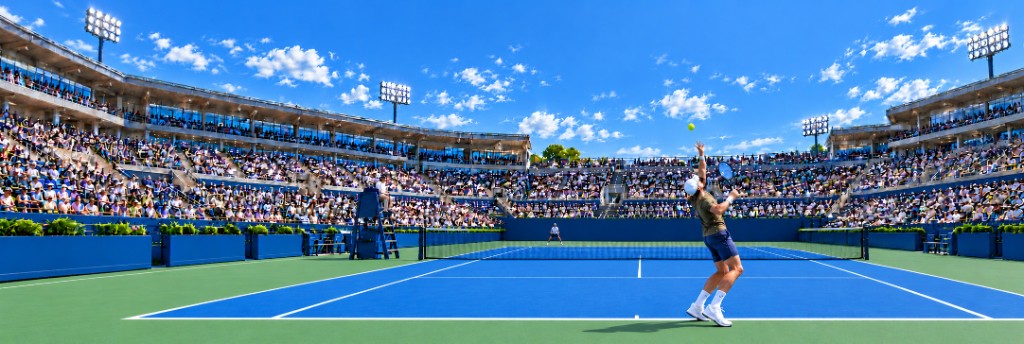
Some of the biggest names in tennis have been competing at the Shanghai Masters, but one thing has been difficult to ignore during television broadcasts: the empty seats close to the court.

Even during matches featuring stars such as Carlos Alcaraz and Alexander Zverev, noticeable gaps in the lower seating sections have raised an interesting question.
Where are the fans?
It’s an unusual sight for an ATP Masters 1000 tournament featuring many of the world’s leading players, particularly in a country where tennis has attracted growing attention.
Alcaraz was among the tournament’s biggest attractions before suffering a surprising third-round defeat to Belgium’s Zizou Bergs. According to ATP Tour’s match report, Bergs produced one of the biggest victories of his career, defeating the Spaniard 7-5, 7-6(4).
Yet the appearance of empty premium seats has prompted questions that go beyond the results on the court.
Could premium ticketing explain the empty seats?
One possible explanation involves the way major sporting events allocate their most desirable seats.
Premium courtside seating, VIP hospitality packages, and corporate ticket arrangements can mean that some of the best seats are purchased or reserved without necessarily being occupied throughout an entire session.
That doesn’t mean those arrangements are responsible for the empty seats in Shanghai. The tournament has not publicly established how many premium seats were sold, reserved, or left unused during individual matches.
Ticket prices, travel time to the venue, and the scheduling of matches could also affect attendance.
The numbers tell a different story
The Rolex Shanghai Masters has established itself as one of the ATP Tour’s premier events.
Before the tournament, both Alcaraz and Novak Djokovic spoke positively about the support they receive from Chinese tennis fans.
As reported by the Shanghai municipal government’s official news website, Djokovic praised the event’s stadiums and attendance, describing Shanghai as one of the tour’s leading Masters tournaments.
That makes the contrast between the tournament’s popularity and the visible empty courtside seats particularly interesting.
A television image, of course, cannot tell us whether a seat was unsold, reserved for a sponsor, or temporarily unoccupied.
A question worth asking
Major tennis tournaments increasingly offer premium hospitality experiences alongside traditional ticket sales. Those arrangements can generate valuable revenue, but they also raise questions about how the most desirable seats are allocated.
If some of the best seats remain empty while fans elsewhere would gladly fill them, should tournament organizers consider ways to release unused seats during matches?
For Shanghai, the unanswered question isn’t necessarily whether people want to watch the world’s best tennis players.
It’s why so many of the seats closest to the action sometimes appear to be empty.
And until organizers provide a breakdown of ticket sales and actual courtside attendance, the explanation remains an open question.
Comments
No comments yet.